"How long will it actually last?" is the question everyone asks and almost no product page answers honestly. The marketing arithmetic assumes a perfect world with zero losses. Real batteries don't work that way.
The calculator below gives a realistic estimate for one appliance on one power station. Pick your capacity and your device, and it accounts for inverter losses and for the fact that things like fridges cycle on and off rather than running flat out.
Runtime calculator
Cycling appliance: it only draws power about 33 % of the time (the motor stops once it reaches temperature).
Estimated runtime
≈ 1d 2h
Estimate for 1000 Wh usable at ~85 % (inverter losses + real depth of discharge). Real numbers vary with temperature, battery age, and appliance efficiency.
How the runtime is calculated
The honest formula is simpler than it looks:
Runtime (hours) = Usable capacity (Wh) / Appliance draw (W)
Two corrections turn the fantasy number into a realistic one.
Usable capacity, not rated capacity
You lose roughly 10 to 15% to inverter and conversion losses, so a 1,000 Wh station delivers closer to 850 to 900 Wh at the outlet. The calculator uses the usable figure, which is why its answers are lower — and more honest — than a simple division.
Duty cycle, for anything that cycles
A fridge doesn't draw its rated wattage continuously. It runs, reaches temperature, shuts off, and repeats all day. So a fridge "rated" at 150W might average 50 to 70W over 24 hours. The calculator factors this in for cycling appliances.
Ignore both corrections and you'll overestimate runtime by a wide margin. That's the single most common reason people feel let down by a unit that was working exactly as designed.
Rough runtime by capacity
Ballpark figures, losses included. Treat them as a starting point and confirm with your own appliance's wattage.
| Appliance (typical draw) | 500 Wh | 1000 Wh | 2000 Wh |
|---|---|---|---|
| Phone charge (~15W) | ~25+ charges | ~50+ charges | ~100+ charges |
| Laptop (~50W) | ~8 to 9 h | ~17 h | ~34 h |
| CPAP machine (~40W, no heat) | ~10 h | ~21 h | ~42 h |
| Mini fridge (cycling, ~40W avg) | ~10 h | ~21 h | ~42 h |
| Full-size fridge (cycling, ~60W avg) | ~7 h | ~14 h | ~28 h |
| Coffee maker (~1000W, brief) | a few brews | several brews | many brews |
| Space heater (1500W) | ~20 min | ~35 min | ~70 min |
Notice the bottom rows. Anything that heats drains a battery fast, and that's physics rather than a weak unit. To run heating appliances for meaningful time you need far more capacity or a different power source entirely.
Which capacity should you choose
Three tiers, based on what this arithmetic usually tells people:
500 Wh
Electronics, lights, a fan, a CPAP machine for one night. Ideal for light camping. Not enough for a fridge overnight.
1000 Wh
The popular middle, and the right answer for most buyers. A fridge for most of a day, a home office backup, a capable camping unit.
2000 Wh and up
Longer outages, several appliances, or pairing with solar so you recharge daily and effectively run indefinitely in good weather.
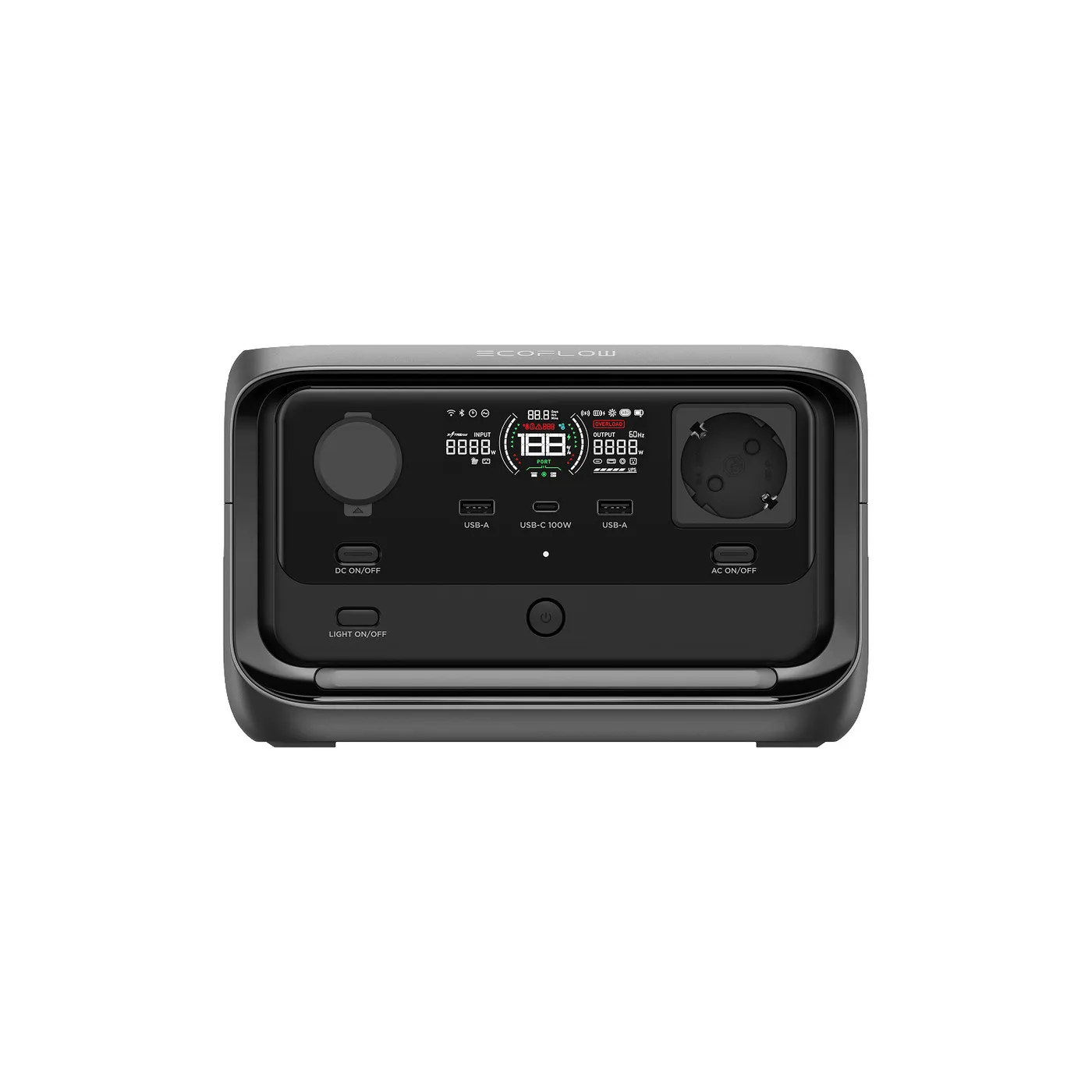
EcoFlow RIVER 3 Plus
What I liked:
- 286 Wh expandable to about 858 Wh: the small station that grows with you
- Light enough to actually carry, with LiFePO4 cells rather than the cheap chemistry usual at this size
- Under 10 ms UPS switching and under 30 dB operation, so it can sit in a bedroom
- Full wall recharge in about an hour
What let me down:
- 286 Wh in base form covers phones, laptops, lights and a camp fridge, nothing that heats
- 600W nominal output rules out most kitchen appliances
- Once you buy the expansion battery, a 1 kWh unit often costs about the same
Where to buy it for the best price
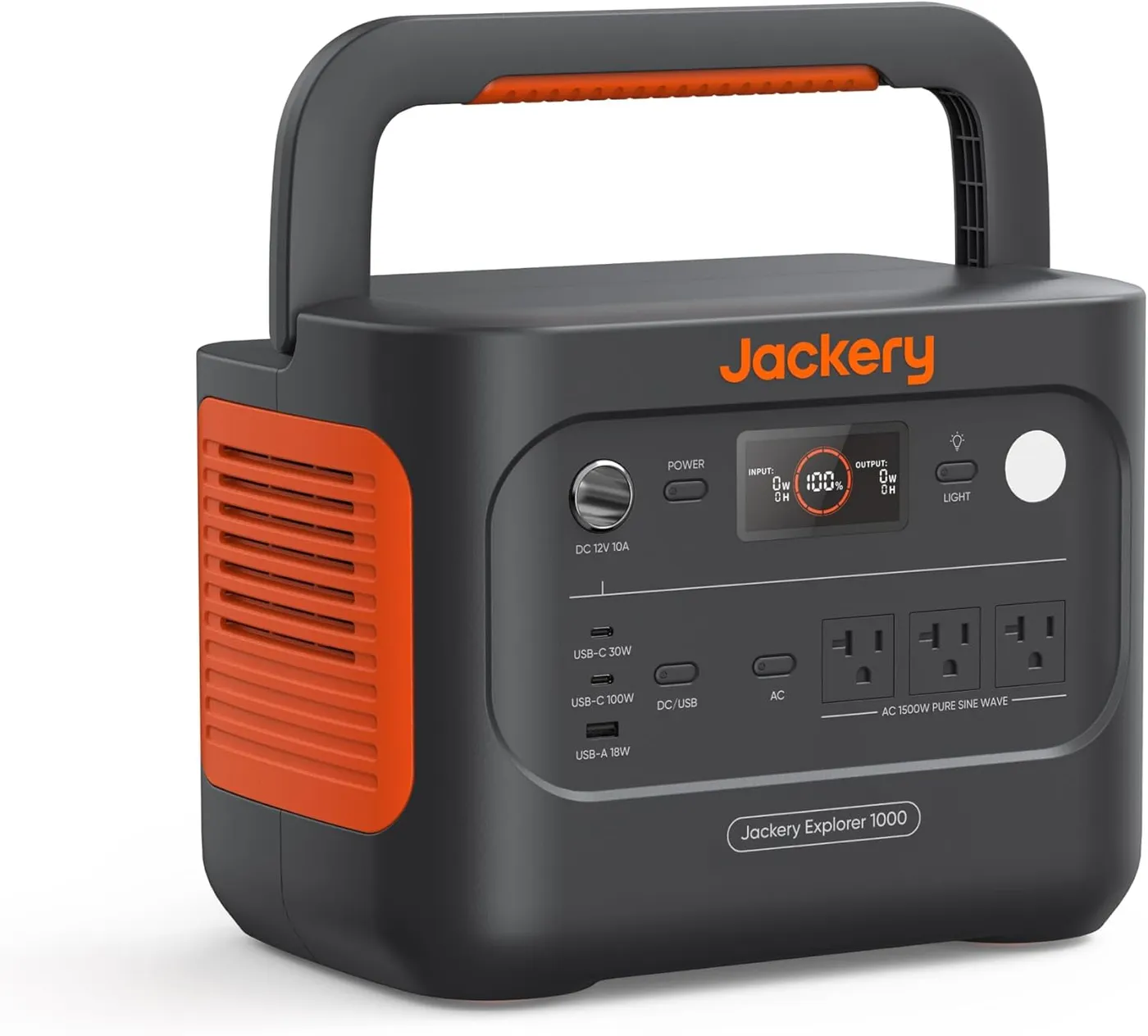
Jackery Explorer 1000 v2
What I liked:
- 1,070 Wh in a genuinely light package for the class, which is what makes it the easy camping pick
- LiFePO4 cells rated to keep over 70% capacity after 4,000 cycles
- Emergency mode charges it 0-100% in about an hour from a wall outlet
- 100W USB-C output, so it charges a laptop without running the inverter
What let me down:
- 1,500W of AC output is the lowest of the 1 kWh picks here: kettles and hair dryers are out
- Only three AC outlets, so a busy campsite runs out of sockets
- Solar panels are sold separately and Jackery's own panels are not cheap
Where to buy it for the best price
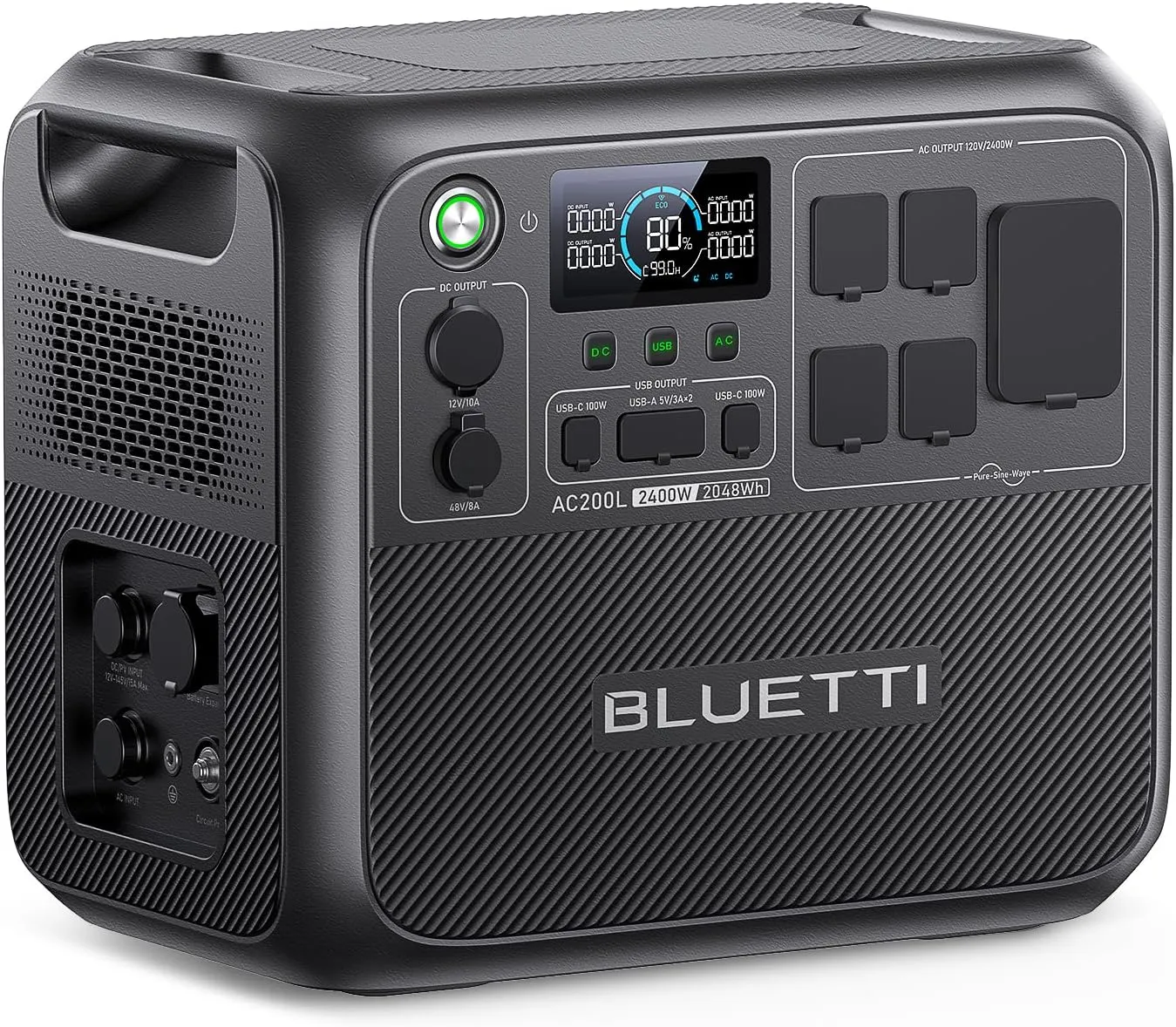
BLUETTI AC200L
What I liked:
- 2,048 Wh and 2,400W (3,600W with Power Lifting): the practical floor for riding out a real outage
- Expandable to 8,192 Wh with B210/B230/B300 batteries, so it grows instead of being replaced
- 30A RV output, the port that makes it genuinely useful for a trailer or camper
- LiFePO4 cells and up to 1,200W of solar input for fast refills
What let me down:
- About 62 lb: two-handed, and you will not be moving it often
- Power Lifting only helps resistive loads such as heaters, not motors
- The expansion batteries cost nearly as much as the unit itself
Where to buy it for the best price
If you're planning for a household outage
This calculator answers the single-appliance question. Planning a blackout is a different problem: several loads run at once, they don't overlap perfectly, and what you actually need to know is whether the battery gets you from evening to morning. That maths lives in the blackout runtime calculator.
Once you have a target capacity, the portable power station buying guide covers the other two specs that matter — chemistry and inverter output — and the power station vs gas generator comparison helps if you're still weighing fuel-based backup. More tools are in the portable power calculators, and the wider category is on the portable power station hub.