When the grid drops, a battery keeps the things that matter running: the fridge, the internet, phone charging, a few lights, and any medical equipment you depend on. Unlike a gas generator it's silent, safe indoors, and there's no 2 a.m. trip to find fuel.
The part almost nobody explains is that "home backup" isn't one product. It's a ladder with four rungs, and each rung costs roughly ten times the one below it. Most people asking about whole-home backup actually need rung two, and finding that out before you get a quote is worth a lot of money.
Below: the four levels, how the electricity physically gets from the battery to your outlets, and where to go next. To size the battery itself, use the home battery sizing guide. To see how long a given battery lasts on your loads, run the blackout runtime calculator. If you're weighing a battery against a portable unit, that's home battery vs portable power station.
Four levels of home backup
| Level | What it is | What it powers | Install |
|---|---|---|---|
| 1 | Portable station + extension cords | Fridge, internet, phones, lights | None |
| 2 | Large station + inlet or transfer switch | The same, plus a few real circuits | Electrician, one visit |
| 3 | Modular expandable system | Most of a house, minus the biggest loads | Electrician, panel work |
| 4 | Permanent battery + smart panel | Whole home, switches over automatically | Full install, permits |
Level 1: a portable station and extension cords
No electrician, no permits, works if you rent. You keep a unit charged in a closet, and when the power goes out you run a cord to the fridge and another to the router. It's unglamorous and it covers the honest majority of outages.
The ceiling is real, though: you're powering appliances you can reach with a cord, and anything hard-wired — furnace, well pump, ceiling lights — stays dark.
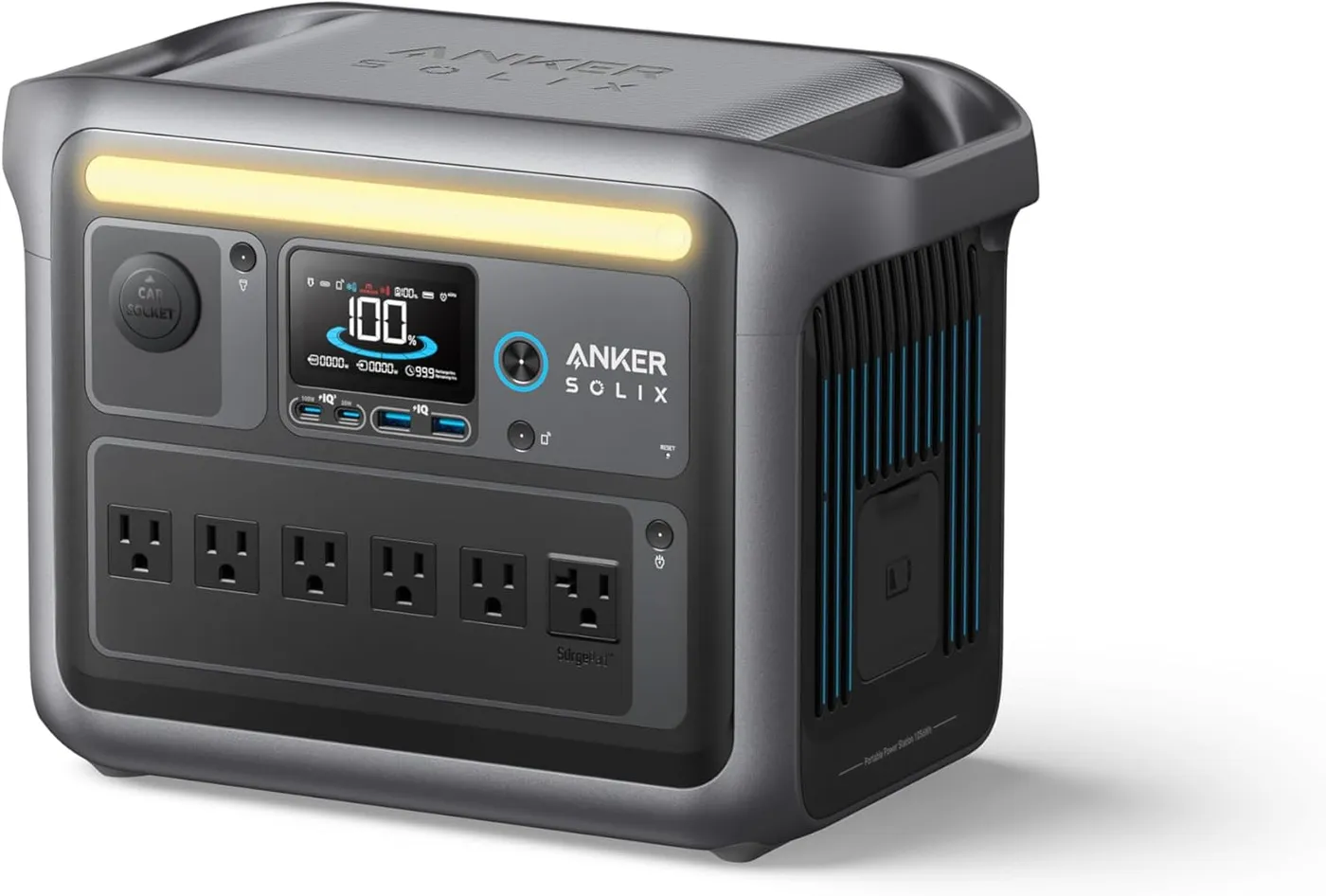
Anker SOLIX C1000
The strong points:
- 1,056 Wh and 1,800W (2,400W peak): matches the Delta 2 on the numbers that matter
- Full recharge in about 58 minutes, and 80% in roughly 43
- Expandable with a second 1,056 Wh battery if your needs grow
- LiFePO4 cells, 11 ports and a 5-year warranty
The weak points:
- Around 28 lb, so it is car-portable rather than truly packable
- Peak surge output is slightly below the Delta 2's
- You get the most out of it by staying inside Anker's ecosystem for expansion and panels
Where to buy it for the best price
Level 2: a large station wired into a few circuits
This is the rung most people actually want. You buy a big portable unit, then have an electrician fit an inlet box and a transfer switch so it can feed selected circuits directly. Now the furnace fan and the hard-wired lights work, and you're not running cords through doorways.
The unit stays portable, so it still goes camping or to a job site. You pay for one electrician visit rather than a system.
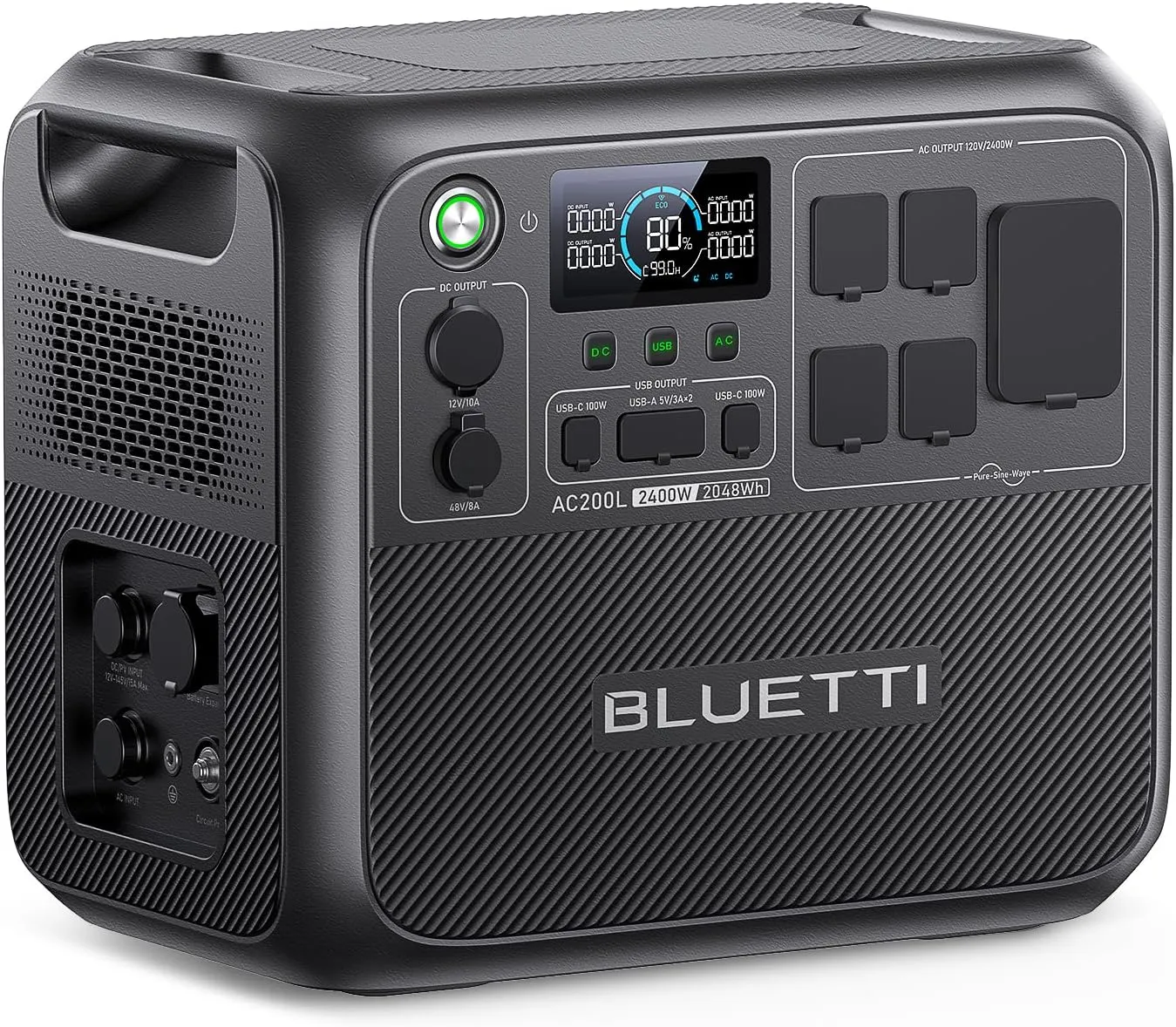
BLUETTI AC200L
What I liked:
- 2,048 Wh and 2,400W (3,600W with Power Lifting): the practical floor for riding out a real outage
- Expandable to 8,192 Wh with B210/B230/B300 batteries, so it grows instead of being replaced
- 30A RV output, the port that makes it genuinely useful for a trailer or camper
- LiFePO4 cells and up to 1,200W of solar input for fast refills
What let me down:
- About 62 lb: two-handed, and you will not be moving it often
- Power Lifting only helps resistive loads such as heaters, not motors
- The expansion batteries cost nearly as much as the unit itself
Where to buy it for the best price
Level 3: a modular, expandable system
Here you buy a base unit and add battery modules as your needs (and budget) grow, wired to a subpanel. It covers most of a house for a day or more, and can usually take solar input to stretch a multi-day outage.
The thing to check before committing is the price of the expansion batteries. On some systems they cost nearly as much as the base unit, which changes the maths of "I'll expand it later" considerably.
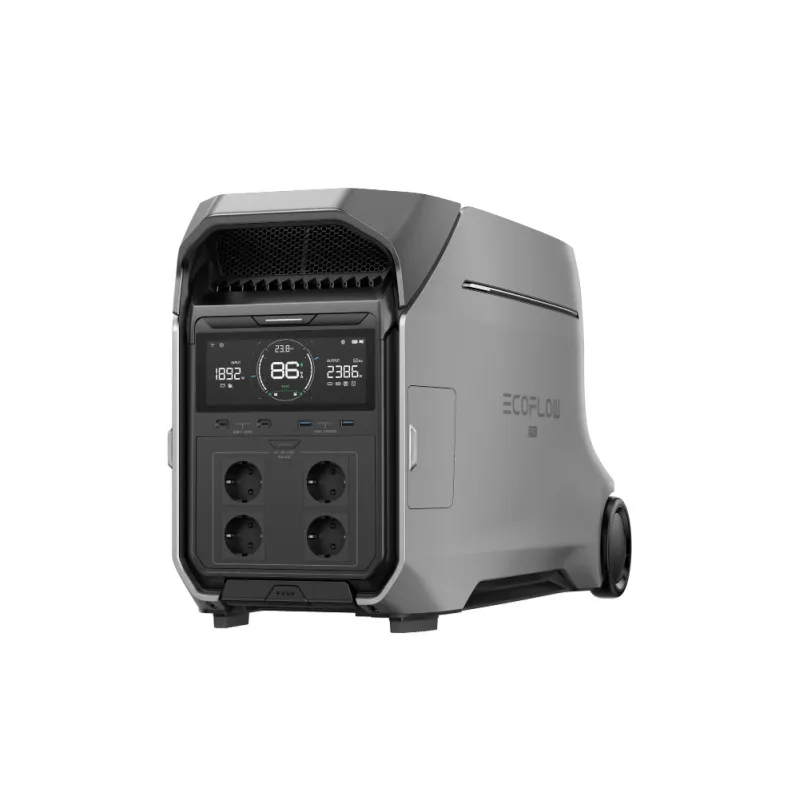
EcoFlow DELTA Pro 3
The strong points:
- 4,096 Wh and 4,000W at 120/240V: the sweet spot between a portable station and a fixed home battery
- Expandable to 48 kWh, so the same unit covers a long outage if you keep adding batteries
- Wheels and a telescopic handle, so unlike most batteries this size one person can still move it
- LFP cells with a 5-year warranty and near-instant UPS switchover
The weak points:
- Around 110 lb: portable in the airport-luggage sense only
- The 240V and whole-home features only pay off with the matching panel or transfer switch
- Expensive per watt-hour compared with adding expansion batteries to a smaller unit
Where to buy it for the best price
Level 4: a permanent battery and a smart panel
A fixed battery tied into your electrical panel, switching over automatically fast enough that you barely notice. It powers the whole house, pairs naturally with rooftop solar, and needs professional installation and permits.
This is a home improvement project, not a purchase. It's genuinely the right answer if you own the house, stay put, and outages are long or frequent where you live — and it's overkill for everyone else.
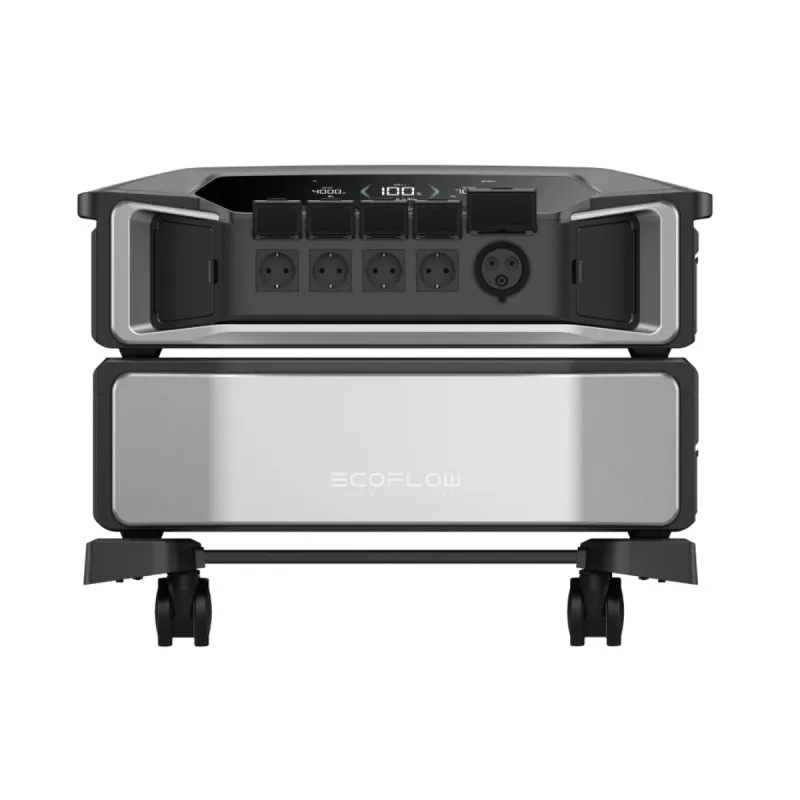
EcoFlow DELTA Pro Ultra
What I liked:
- 6,144 Wh per unit and 7,200W of 120/240V output: genuinely whole-home rather than essentials-only
- Scales to 90 kWh, which is what makes it a Powerwall alternative rather than a big power station
- Charges to full in about 2 hours, so it recovers between waves of an outage
- Modular: inverter and batteries are separate, so you buy capacity as you need it
What let me down:
- Whole-home transfer needs the Smart Home Panel, which is a serious install and a serious extra cost
- Each battery module is heavy enough to need two people and a permanent spot
- At this price a quoted, permitted home battery deserves a side-by-side comparison before you commit
How the power actually reaches your circuits
This is the part of home backup that gets skipped, and it's where most of the confusion (and most of the cost) actually lives. A battery is useless until its electricity has a safe path into your home's wiring. There are four common paths.
Extension cords. Free, instant, no electrician. Only reaches things you can plug in.
A generator inlet box. An exterior socket wired to a dedicated circuit. You plug the battery in outside and it feeds that circuit. Cheap as electrical work goes, and the usual companion to level 2.
A manual transfer switch. A small sub-panel with switches for a handful of circuits. You flip them over when the grid fails and back when it returns. Nothing is automatic, but nothing can go wrong by accident either.
An interlock kit or smart panel. A mechanical or electronic system that makes it physically impossible to energise both the grid and your battery at once, letting you back-feed your main panel. A smart panel adds automatic switching and per-circuit control.
One rule matters more than the details: anything that connects to your house wiring is work for a licensed electrician, and it's governed by local code. The specific requirements vary by jurisdiction, and this is the one area of solar where getting it wrong can back-feed a line someone else is working on. Never improvise a connection to your panel — the "suicide cord" you'll see described online is exactly as dangerous as the name suggests.
How long will it hold?
Runtime depends far more on what you're keeping alive than on the battery's headline capacity. A fridge, a router and some LED lights draw a fraction of what people expect; add an electric water heater or window AC and the same battery empties in hours.
Runtime calculator
Cycling appliance: it only draws power about 33 % of the time (the motor stops once it reaches temperature).
Estimated runtime
≈ 3d 21h
Estimate for 3600 Wh usable at ~85 % (inverter losses + real depth of discharge). Real numbers vary with temperature, battery age, and appliance efficiency.
The full method — how to sum several loads that run at once, and how to think about overnight versus multi-day outages — is on the blackout runtime calculator.
The backup batteries I'd actually buy
Two of these I bought and lived with; the whole-home systems are ones I've specced out rather than installed, and each card below says which is which. The ratings are my own editorial scores, built the way I describe in how I rate products.
| Model | Capacity | Power | Rating | |
|---|---|---|---|---|
EcoFlow DELTA Pro Ultra EcoFlow | 6144 Wh | 7200 W | 4.5 | Check price |
EcoFlow DELTA Pro 3 EcoFlow | 4096 Wh | 4000 W | 4.6 | Check price |
Anker SOLIX F3800 Anker | 3840 Wh | 6000 W | 4.5 | Check price |
BLUETTI AC200L BLUETTI | 2048 Wh | 2400 W | 4.5 | Check price |
Anker SOLIX C1000 Anker | 1056 Wh | 1800 W | 4.6 | Check price |
Sorted by capacity · Partner links · prices shown on the retailer page.
Individual write-ups are in my home backup reviews, starting with the EcoFlow Delta Pro Ultra review if you're looking at level 4. The head-to-heads live in home backup comparisons, the sizing maths in my home backup buying guides, and the interactive versions in the home backup calculators.
Backup power, everyday power, and living off-grid
Backup is one of three reasons people buy batteries, and it's worth knowing which one you're actually solving for.
If the unit's main job is to travel — camping, a job site, a tailgate — and outage duty is a bonus, you're shopping for a portable power station, where portability and weight drive the choice instead of circuits and switchover.
If you're powering a cabin, van or RV that has no grid connection at all, backup isn't the frame. That's off-grid and DIY solar, where you assemble panels, a charge controller, a battery bank and an inverter yourself and get considerably more storage per dollar in exchange for doing the wiring.