A portable power station is a battery, an inverter and a set of outlets in one box. You charge it from the wall, your car or solar panels, and it gives you household power wherever you are, silently and without fumes.
Almost every buying mistake I see comes from one question nobody asks first: what job is this thing for? A unit that is perfect for camping is useless in a two-day outage, and the 2,000 Wh brick that saves your fridge is a miserable thing to carry to a campsite. So start there, then size it.
Below: the three jobs, what each one costs you in weight and money, and where to go next depending on what you're solving. If you already know your job and want the spec-by-spec detail, jump to the portable power station buying guide. If you're still deciding between battery and gasoline, read power station vs gas generator. If you just want a number, use the runtime calculator.
Three jobs, three sizes
| Your job | Size band | What it realistically covers |
|---|---|---|
| Weekend camping, car trips | 300 to 500 Wh | Phones, laptop, lights, fan, camera gear |
| Home office, van life, short outage | 1,000 to 1,500 Wh | Everything above, plus a fridge for most of a day |
| Multi-day outage, several appliances | 2,000 Wh and up | A fridge plus other loads, worth pairing with solar |
Those bands are the whole decision. The specs that sit underneath them — watt-hours versus watts, and which battery chemistry to insist on — are covered properly in the buying guide; here I'll stay on the job.
Weekend camping and car trips: 300 to 500 Wh
This is the band people underestimate least often, because the job is genuinely small. If you're charging phones and a laptop, running LED lights and a fan, and maybe a small pump, a few hundred watt-hours is plenty and you'll appreciate carrying four or five kilos instead of twenty.
The trap in this band is buying the very cheapest thing on sale. A 300 Wh unit with a weak inverter will refuse to start anything that heats, and if it isn't LiFePO4 you'll be shopping again in two years.
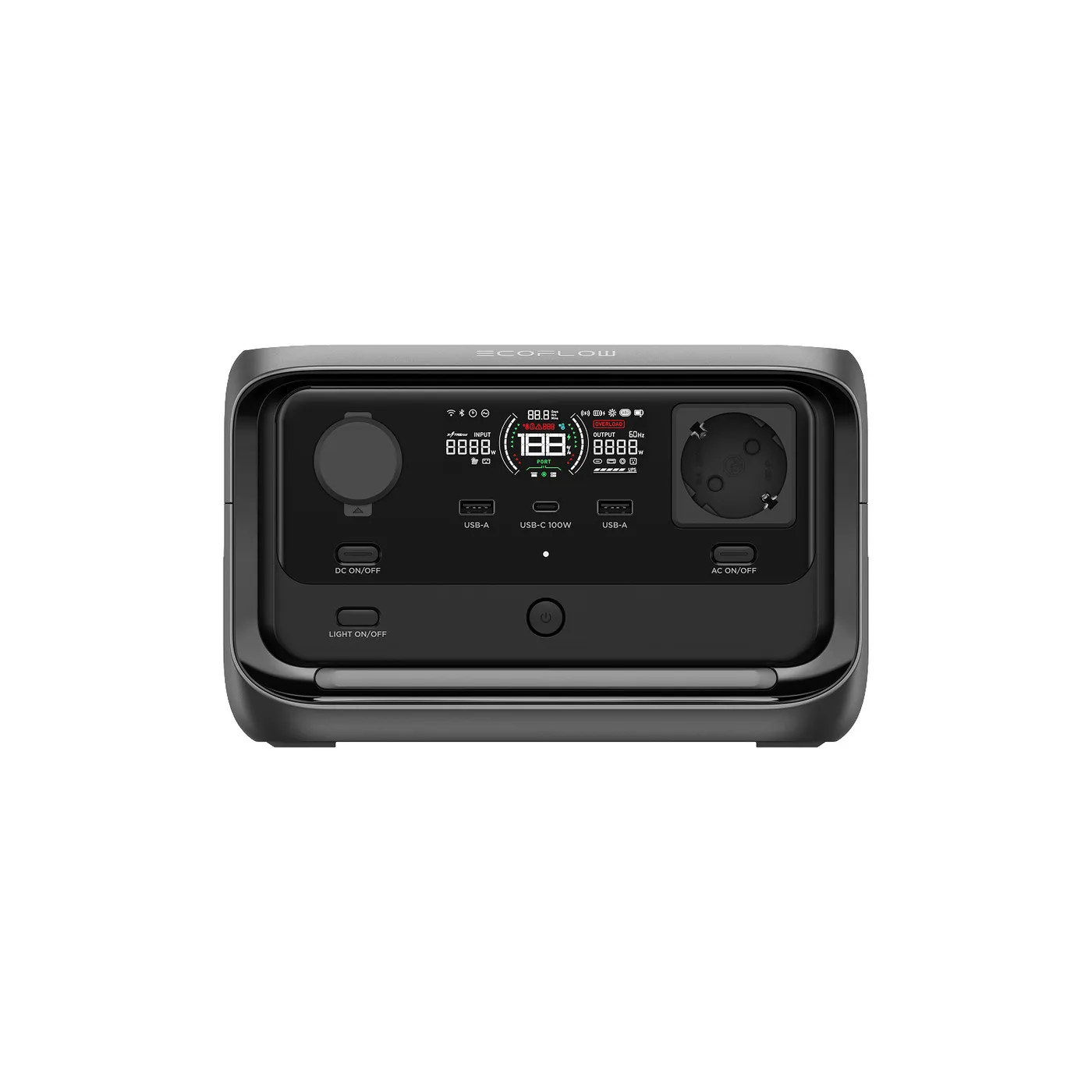
EcoFlow RIVER 3 Plus
What I liked:
- 286 Wh expandable to about 858 Wh: the small station that grows with you
- Light enough to actually carry, with LiFePO4 cells rather than the cheap chemistry usual at this size
- Under 10 ms UPS switching and under 30 dB operation, so it can sit in a bedroom
- Full wall recharge in about an hour
What let me down:
- 286 Wh in base form covers phones, laptops, lights and a camp fridge, nothing that heats
- 600W nominal output rules out most kitchen appliances
- Once you buy the expansion battery, a 1 kWh unit often costs about the same
Where to buy it for the best price
The do-everything size: 1,000 to 1,500 Wh
If you buy one power station and want it to cover a home office, a fridge during a short outage, and camping, this is the band. It's the size I recommend most often, because it's the smallest one that can genuinely keep a full-size refrigerator going for most of a day while still being portable.
Two things separate good units here from mediocre ones: an inverter rated high enough to start a fridge compressor without tripping, and enough solar input that recharging off-grid doesn't take all day.
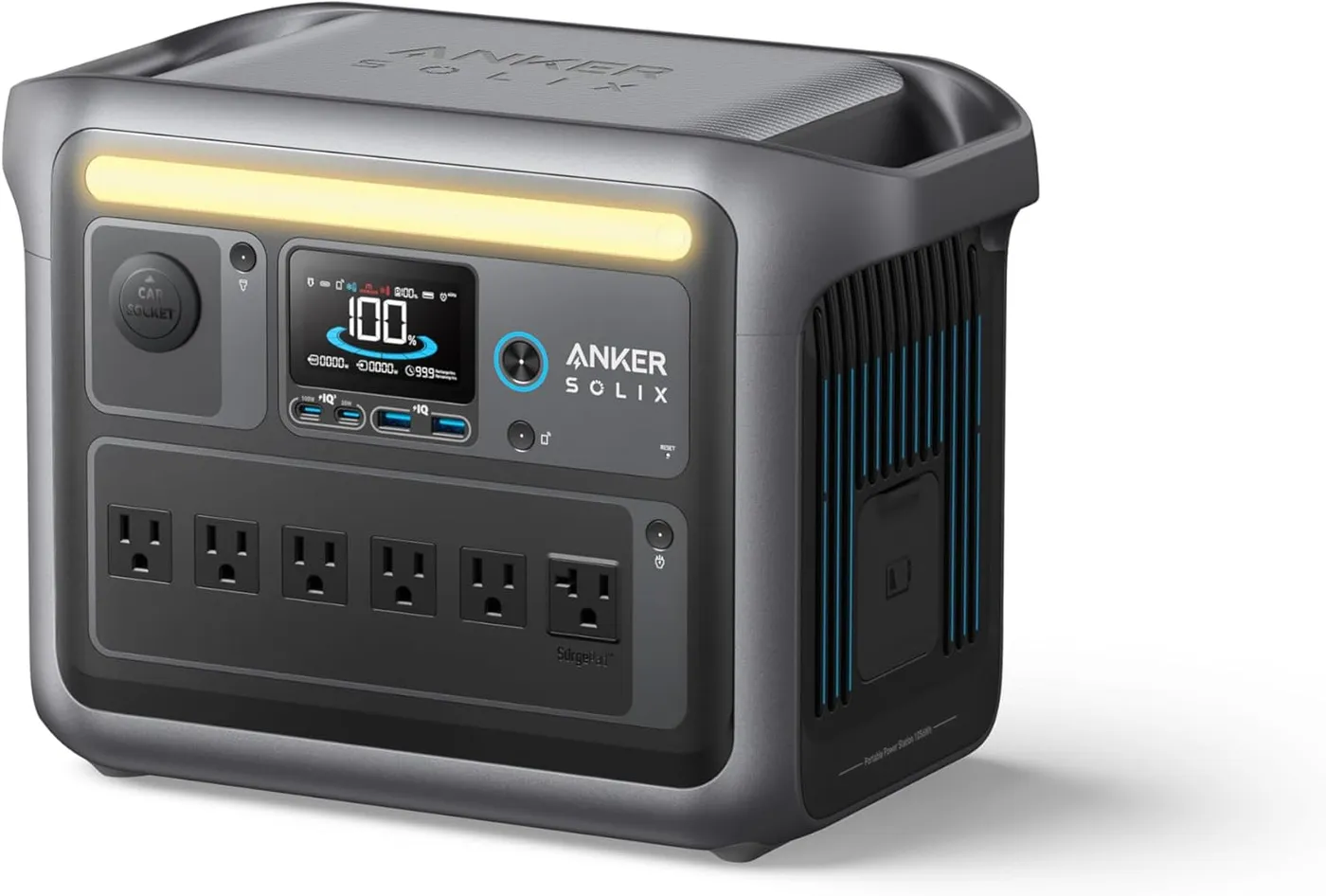
Anker SOLIX C1000
The strong points:
- 1,056 Wh and 1,800W (2,400W peak): matches the Delta 2 on the numbers that matter
- Full recharge in about 58 minutes, and 80% in roughly 43
- Expandable with a second 1,056 Wh battery if your needs grow
- LiFePO4 cells, 11 ports and a 5-year warranty
The weak points:
- Around 28 lb, so it is car-portable rather than truly packable
- Peak surge output is slightly below the Delta 2's
- You get the most out of it by staying inside Anker's ecosystem for expansion and panels
Where to buy it for the best price
Outages and full-time van life: 2,000 Wh and up
Above 2,000 Wh you're buying endurance, and you're paying for it in weight — these are two-hands-and-a-cart machines. The reason to go here is a named load you must keep running for longer than a day, or a van you live in year-round.
Once you're in this band, ask a harder question first: are you actually shopping for a portable unit, or for home backup? They cost similar money and solve different problems.
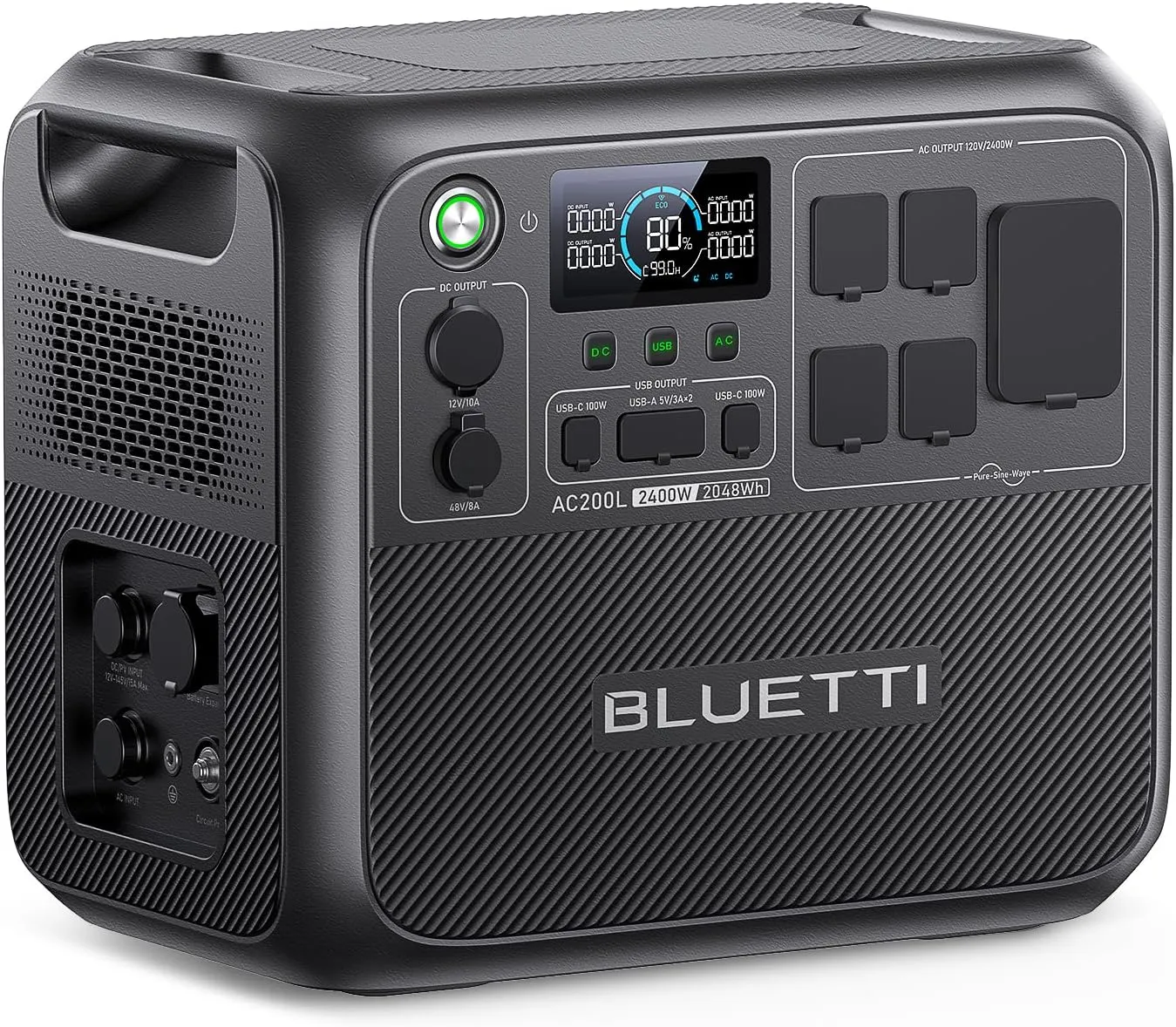
BLUETTI AC200L
What I liked:
- 2,048 Wh and 2,400W (3,600W with Power Lifting): the practical floor for riding out a real outage
- Expandable to 8,192 Wh with B210/B230/B300 batteries, so it grows instead of being replaced
- 30A RV output, the port that makes it genuinely useful for a trailer or camper
- LiFePO4 cells and up to 1,200W of solar input for fast refills
What let me down:
- About 62 lb: two-handed, and you will not be moving it often
- Power Lifting only helps resistive loads such as heaters, not motors
- The expansion batteries cost nearly as much as the unit itself
Where to buy it for the best price
Solar generator, power station, battery generator: the same thing?
Mostly yes, and the naming is marketing rather than engineering. All three names describe the same hardware: a lithium battery pack, an inverter that turns its DC into 120V AC, a charge controller, and outlets.
"Solar generator" is the term that causes trouble. It suggests panels are included and that the unit makes its own power. Usually neither is true. Panels are almost always sold separately, and the box only becomes solar-powered if you buy them and if its solar input rating is high enough to matter. A station that accepts 400W of solar recharges in a useful fraction of a day. One capped at 100W will still be crawling by sunset.
So when you see "solar generator," read it as "power station that can accept solar," then go and check the input number. That single spec is the difference between a genuinely off-grid box and a battery you have to drive somewhere to refill.
The one thing none of these names is: a gas generator. Those burn fuel, produce carbon monoxide, and must stay outdoors — a completely different set of trade-offs I've laid out in power station vs gas generator.
How long will it actually last?
The capacity printed on the box is not what you get. You lose some to inverter and conversion losses, and appliances that cycle on and off — refrigerators above all — draw far less over a day than their nameplate wattage suggests.
Put your own appliance in and see:
Runtime calculator
Cycling appliance: it only draws power about 33 % of the time (the motor stops once it reaches temperature).
Estimated runtime
≈ 1d 2h
Estimate for 1000 Wh usable at ~85 % (inverter losses + real depth of discharge). Real numbers vary with temperature, battery age, and appliance efficiency.
The full method, including where those losses come from and why fridges are the most commonly miscalculated load, is on the power station runtime calculator page.
The stations I keep coming back to
Most of these I bought myself; where a unit is a spec-based pick instead, its card says so. Ratings are my own editorial scores — how they're built is explained in how I rate products.
| Model | Capacity | Power | Rating | |
|---|---|---|---|---|
BLUETTI AC200L BLUETTI | 2048 Wh | 2400 W | 4.5 | Check price |
Jackery Explorer 1000 v2 Jackery | 1070 Wh | 1500 W | 4.6 | Check price |
Anker SOLIX C1000 Anker | 1056 Wh | 1800 W | 4.6 | Check price |
EcoFlow RIVER 3 Plus EcoFlow | 286 Wh | 600 W | 4.4 | Check price |
Sorted by capacity · Partner links · prices shown on the retailer page.
Longer write-ups on the individual units live in my portable power station reviews — the EcoFlow Delta 2 review is the most useful starting point if you're shopping the 1,000 Wh band. For the head-to-head format, see all my portable power comparisons; for the spec-by-spec method, my portable power buying guides; and to put numbers on any of it, the portable power calculators.
Where a power station stops being the right tool
A portable unit is the wrong answer more often than the category admits, and there are two directions to go when it is.
You want the house to stay on by itself. If you're trying to ride out long outages, power circuits rather than extension cords, or have the switchover happen automatically while you're asleep, you want home backup batteries — a different class of hardware with a different install path.
You want more capacity per dollar and don't mind wiring. If the unit is going in an RV, a van or a cabin and will live there permanently, assembling the parts yourself gets you far more storage for the money. That's off-grid and DIY solar: panels, a charge controller, a battery bank and an inverter, chosen separately.
And if the honest answer is "I need to run a well pump for three days," neither of those is it. That's still gas generator territory, for the reasons in the comparison.