Before you buy a single panel, it helps to know the honest financial picture: what a setup costs, what it saves you each year versus the alternative, and how long until it pays for itself. This calculator gives you that estimate for a DIY solar setup.
Enter the system's wattage and your estimated cost, and it works out the rough payback based on what that solar production is worth to you.
Solar payback calculator
Without a battery or net metering, surplus produced while you are away flows back to the grid.
Production / year
810 kWh
Savings / year
$91
Payback
9.9 yrs
Rough estimate: real output depends on orientation, tilt, shading, and weather. A south-facing array with no shade produces far more than a north-facing one.
Size your off-grid system first →How the payback is estimated
Payback is just cost divided by yearly savings:
Payback (years) = System cost / Annual value of the energy it produces
The two inputs that decide it:
- System cost. Panels, battery, charge controller, inverter, wiring and mounts. DIY keeps this low because you skip installation labor, which is often a large chunk of a professional quote.
- Annual value of production. This is what the solar energy replaces. Off-grid, it is usually the cost of the alternative you would otherwise run, most often generator fuel, or grid power if a connection was even an option. In many remote cases, the alternative is having no power at all, and then the "payback" is really about avoided generator fuel and hassle.
One honest note: off-grid solar is often not primarily a money decision. When running a grid line to a remote cabin would cost tens of thousands, solar is not competing on payback, it is the only sane option. The calculator is most useful when you have a real alternative to compare against, like a fuel generator.
What drives payback up or down
| Factor | Faster payback | Slower payback |
|---|---|---|
| Alternative cost | Expensive generator fuel or grid extension | Cheap grid power available |
| Sun hours | Sunny location, year-round | Cloudy northern climate |
| DIY vs installed | You build it yourself | You pay for installation |
| Battery share of cost | Modest battery | Huge battery bank for many days of autonomy |
| Usage | You use most of what you produce | Oversized system, wasted output |
The single biggest lever is what you are replacing. Displacing expensive generator runtime pays back fast. Displacing cheap grid power pays back slowly, which is exactly why off-grid solar makes the most sense where the grid is far away or absent.
How to read your result
- Short payback (a few years): you are replacing something expensive, like constant generator use. Solar is clearly worth it.
- Long payback (many years): you are competing against cheap grid power, or you oversized the system. Rightsize it, or accept that your reasons are non-financial (silence, independence, no fuel runs).
- No real alternative: if the honest comparison is "no power at all," ignore payback and focus on sizing it correctly instead.
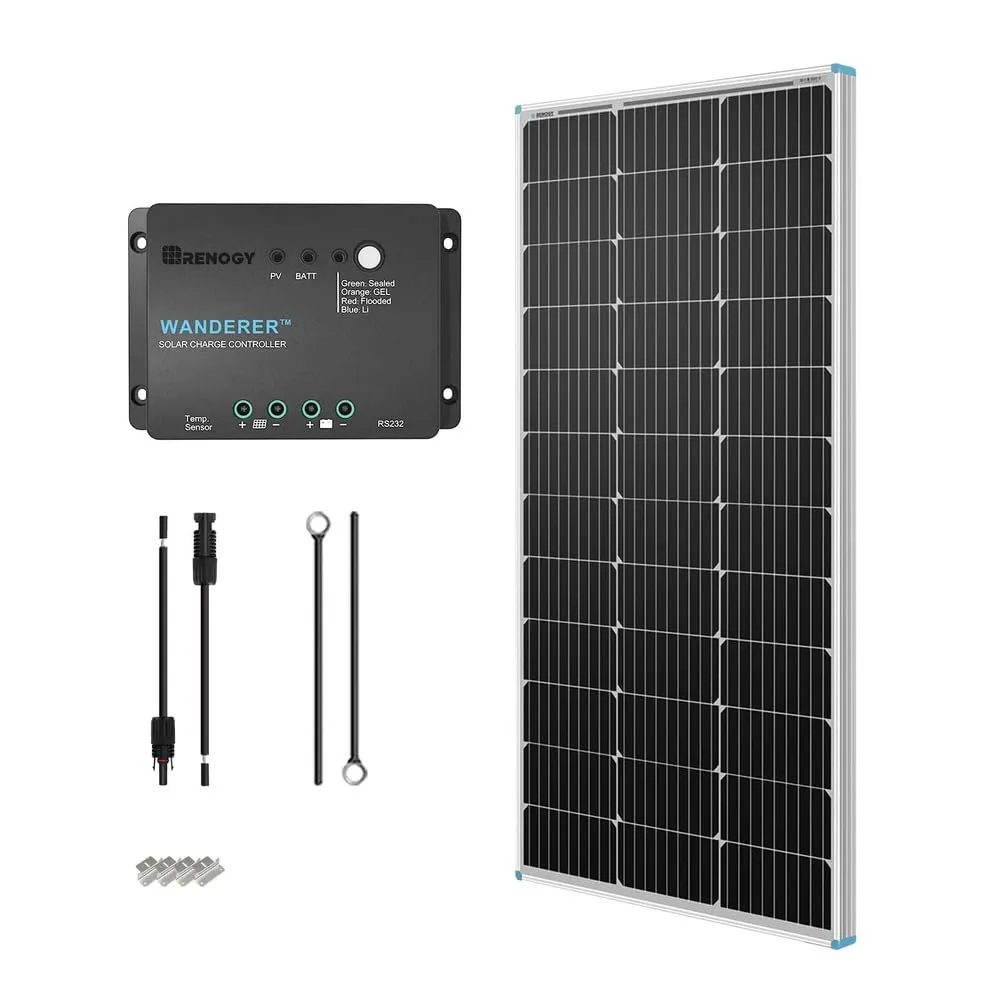
Renogy 100W 12V Solar Panel Starter Kit
The strong points:
- Panel, charge controller, brackets and cabling in one box: nothing missing on install day
- The cheapest honest way to find out whether off-grid solar suits you before scaling up
- The panel and mounting hardware stay useful even after you outgrow the controller
- Well-documented kit, so troubleshooting help is easy to find
The weak points:
- Ships with a PWM controller, which gives up roughly 20-30% of what the panel could deliver
- 100W is a phone-and-lights budget, not a fridge budget
- No battery included, which is usually the most expensive part of the build
Where to buy it for the best price
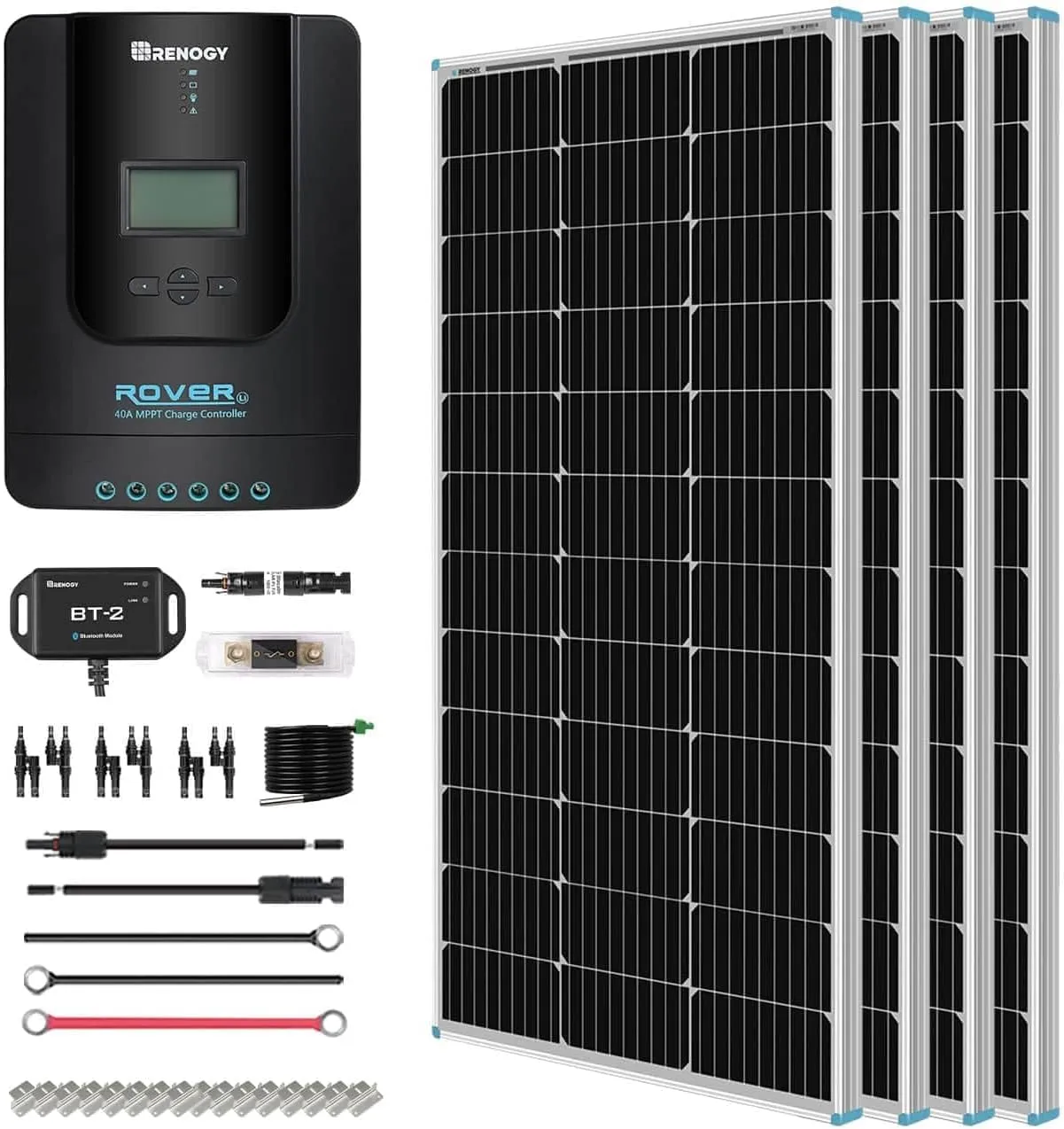
Renogy 400W 12V Premium Solar Kit
The strong points:
- 4x100W plus a 40A MPPT controller: the smallest kit that powers a realistic van or cabin load
- MPPT rather than PWM, worth roughly 20-30% more harvest from the same panels
- Bluetooth module included, so you can see production and battery state from your phone
- Brackets, fuse, adaptor kit and tray cables included: no second parts order
The weak points:
- Still no battery, and that is where the rest of the budget goes
- Four rigid panels need real roof or ground space and proper mounting
- The 40A controller caps you near 520W on a 12V system, so a bigger array means a bigger controller
Where to buy it for the best price
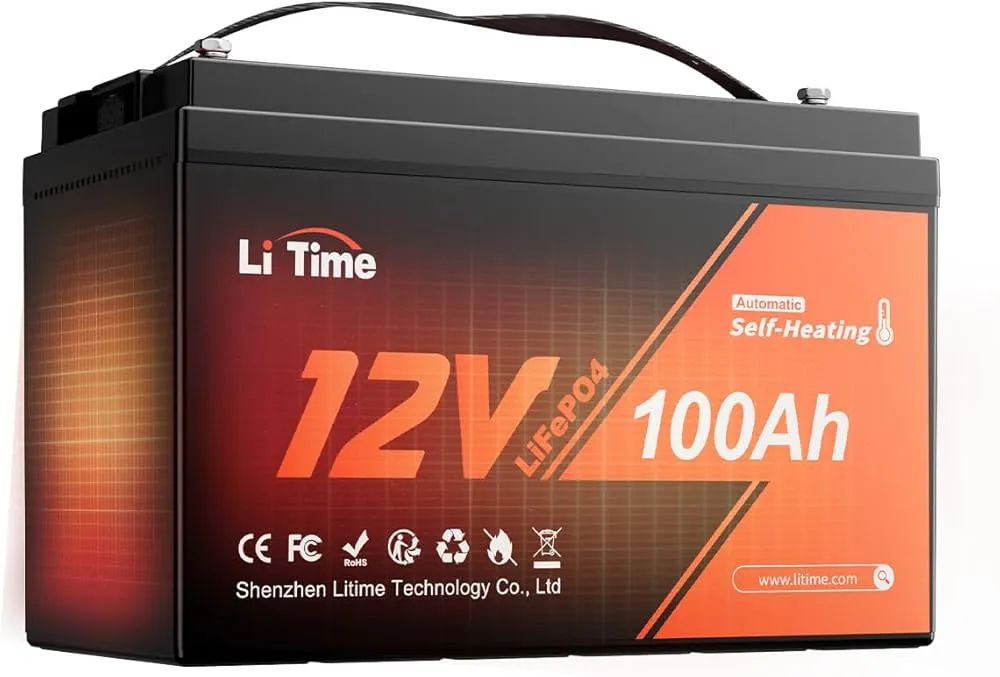
LiTime 12V 100Ah LiFePO4 Battery
What I liked:
- 1,280 Wh of storage for a fraction of what the same capacity costs sealed inside a power station
- Rated for thousands of cycles, against 200-500 for the lead-acid battery it replaces
- About 22 lb, roughly a third the weight of an equivalent lead-acid bank
- Group 31 case and built-in 100A BMS, so it drops into standard battery trays
What let me down:
- No built-in inverter or charger: this is a component, not a finished system
- Charging below freezing damages plain LiFePO4 unless you pay up for a low-temp-protected model
- You still need a charge controller, fusing and wiring, and getting those wrong is the dangerous part
Where to buy it for the best price
Before spending, make sure the system is sized for your real loads and your worst month. That is the difference between a setup that works in December and one that only works in July. Walk through it in the off-grid solar sizing guide, and choose the controller with MPPT vs PWM.
For the whole picture — the five components, the three build sizes and the system-voltage decision — start at the off-grid solar hub. Other estimators live in the off-grid calculators, and the components I've bought and wired are in my off-grid gear reviews.