When the grid goes down, the only number that matters is how long your battery keeps the important things alive — all of them, at the same time. Product pages quote big kWh figures but rarely translate them into "your essentials last until morning." This does.
Pick a battery capacity and a load below to get a realistic estimate, then read on for how to handle several appliances at once, which is the part that makes outage planning different.
Runtime calculator
Cycling appliance: it only draws power about 33 % of the time (the motor stops once it reaches temperature).
Estimated runtime
≈ 3d 21h
Estimate for 3600 Wh usable at ~85 % (inverter losses + real depth of discharge). Real numbers vary with temperature, battery age, and appliance efficiency.
Why an outage isn't a single-appliance test
Running one device off a battery is arithmetic. Surviving an outage is a different problem, and four things make it so.
Loads overlap, but never perfectly
Add up the nameplate wattage of everything you want to keep running and you'll get a frightening number that never occurs. The fridge compressor and the furnace fan rarely start together, and neither runs continuously. Sum the average draws over the outage, not the peak ratings. An essentials bundle — fridge, internet, a few lights, phone charging — typically averages a couple of hundred watts, which is why a mid-size battery stretches further than people fear.
The overnight window is the real question
Most outages are survived rather than lived through. What you need to know is whether the battery carries you from dinner to breakfast, not how many hours it could theoretically sustain a fixed load. Size against that window and you'll make a much better decision than sizing against a number of hours.
Motor startup decides what runs at all
Fridges, furnace fans, well pumps and sump pumps spike hard for a fraction of a second when their motors start. That spike barely affects runtime, but it determines whether the appliance starts — and no runtime figure will warn you about it. It's a question about the inverter's surge rating, not the battery's capacity.
Winter is when it matters and when you have least
Outages cluster in bad weather, batteries hold less when cold, and heating loads rise at the same time. Plan for the season you'll actually need it in, not for a mild evening.
If what you want instead is the underlying single-appliance formula, with the loss and duty-cycle corrections spelled out, it's on the power station runtime calculator.
Rough runtime by battery size
Ballpark figures for common essential loads, losses included.
| Load (average draw) | 1 kWh | 3.6 kWh | 10 kWh |
|---|---|---|---|
| Internet (router + modem, ~20W) | ~2 days | ~1 week | very long |
| Fridge (cycling, ~60W avg) | ~14 h | ~2 days | ~1 week |
| Essentials bundle (fridge + internet + lights + phones, ~180W avg) | ~5 h | ~17 h | ~2 days |
| Window AC (small, ~500W avg part-time) | ~1.7 h | ~6 h | ~17 h |
| Well pump (intermittent, ~300W avg) | ~3 h | ~10 h | ~28 h |
Two things jump out. Essentials alone stretch a long way, which is why most people need less battery than they fear. And anything with a compressor — air conditioning, a well pump — eats capacity fast, which is exactly why whole-home backup gets expensive.
What the numbers usually tell people
1 kWh
Internet, phones and a fridge for a while. Fine for a short outage, or for a renter covering the basics.
3 to 5 kWh
The practical sweet spot: essentials through a full day without recharging. This is where most households should land.
10 kWh and up
Longer autonomy or larger loads, and worth having only if paired with solar so it refills each day rather than simply draining once.
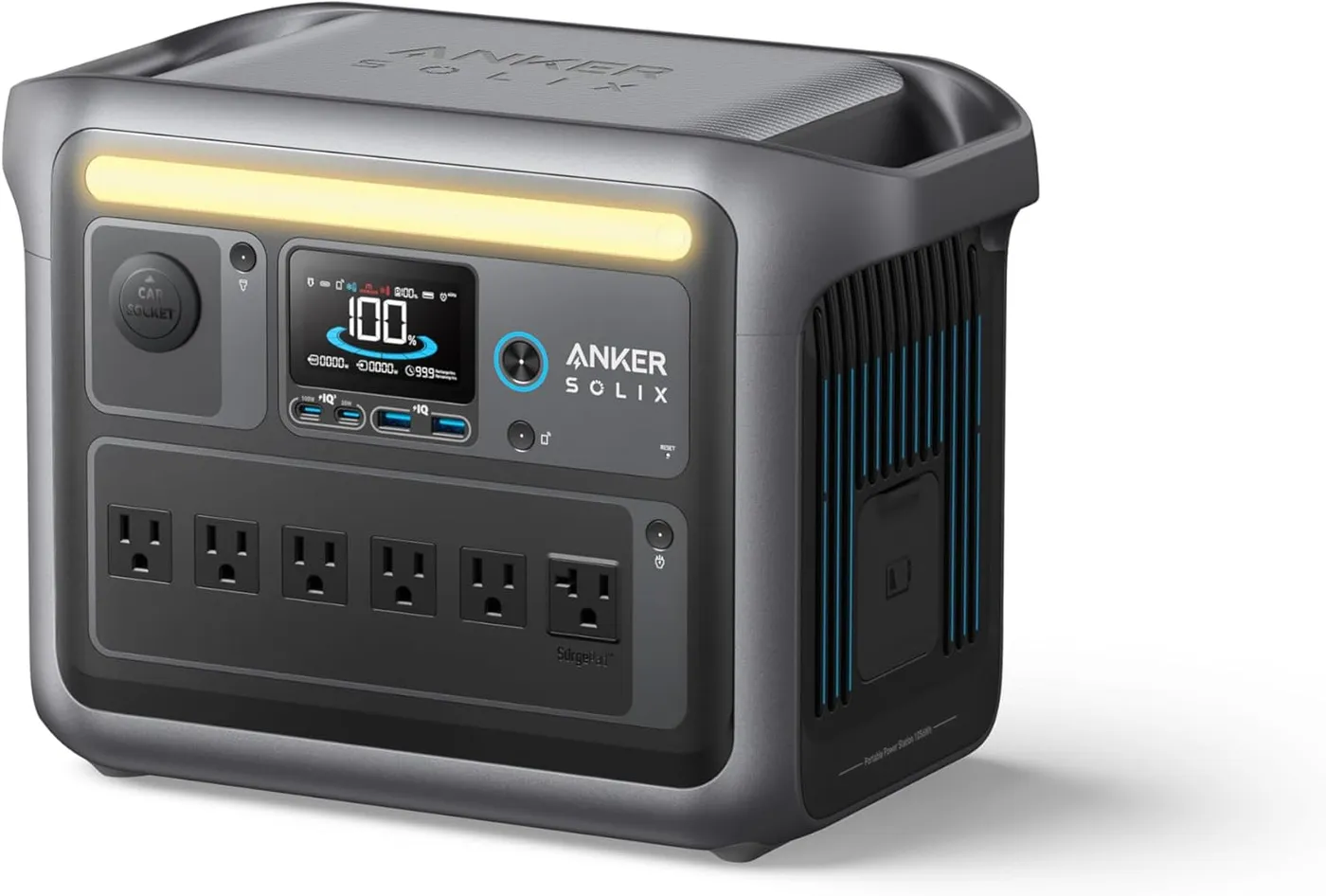
Anker SOLIX C1000
The strong points:
- 1,056 Wh and 1,800W (2,400W peak): matches the Delta 2 on the numbers that matter
- Full recharge in about 58 minutes, and 80% in roughly 43
- Expandable with a second 1,056 Wh battery if your needs grow
- LiFePO4 cells, 11 ports and a 5-year warranty
The weak points:
- Around 28 lb, so it is car-portable rather than truly packable
- Peak surge output is slightly below the Delta 2's
- You get the most out of it by staying inside Anker's ecosystem for expansion and panels
Where to buy it for the best price
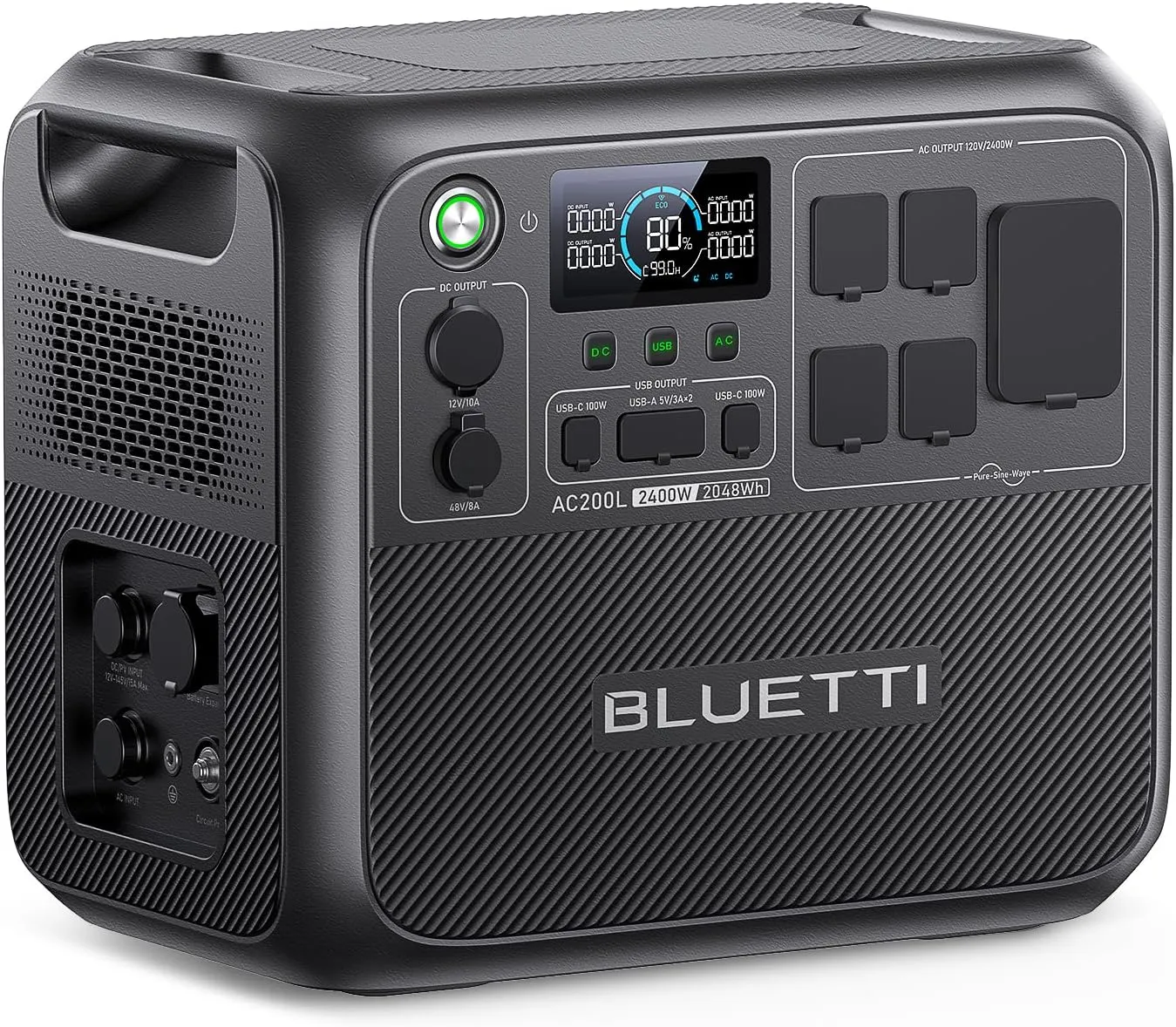
BLUETTI AC200L
What I liked:
- 2,048 Wh and 2,400W (3,600W with Power Lifting): the practical floor for riding out a real outage
- Expandable to 8,192 Wh with B210/B230/B300 batteries, so it grows instead of being replaced
- 30A RV output, the port that makes it genuinely useful for a trailer or camper
- LiFePO4 cells and up to 1,200W of solar input for fast refills
What let me down:
- About 62 lb: two-handed, and you will not be moving it often
- Power Lifting only helps resistive loads such as heaters, not motors
- The expansion batteries cost nearly as much as the unit itself
Where to buy it for the best price
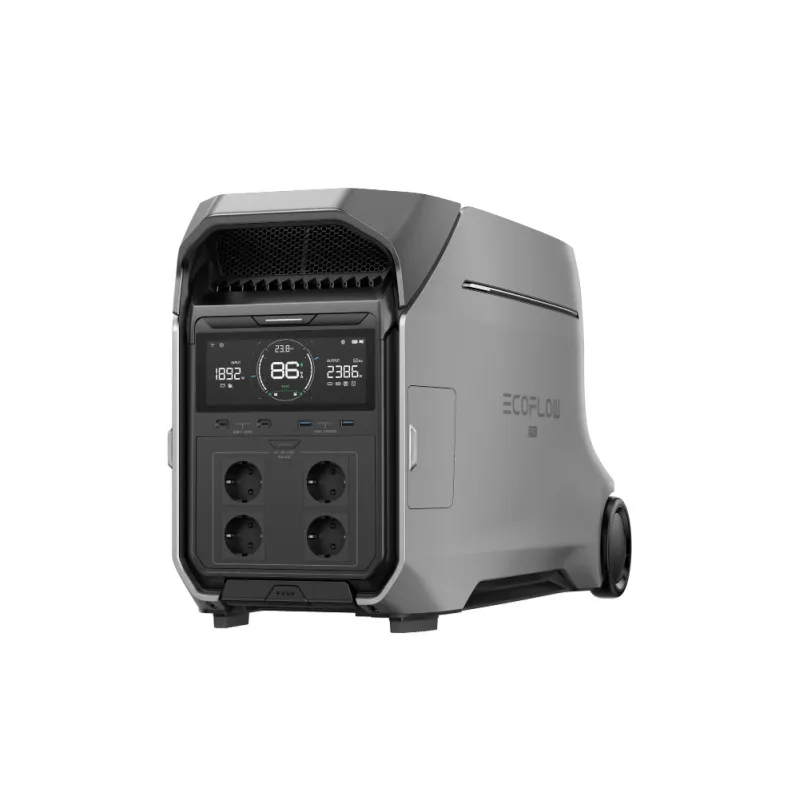
EcoFlow DELTA Pro 3
The strong points:
- 4,096 Wh and 4,000W at 120/240V: the sweet spot between a portable station and a fixed home battery
- Expandable to 48 kWh, so the same unit covers a long outage if you keep adding batteries
- Wheels and a telescopic handle, so unlike most batteries this size one person can still move it
- LFP cells with a 5-year warranty and near-instant UPS switchover
The weak points:
- Around 110 lb: portable in the airport-luggage sense only
- The 240V and whole-home features only pay off with the matching panel or transfer switch
- Expensive per watt-hour compared with adding expansion batteries to a smaller unit
Where to buy it for the best price
If the runtime you're seeing is shorter than you want, the honest fix is usually solar recharging rather than a much bigger battery — a battery that refills each day effectively runs indefinitely in good weather, while a larger one only postpones the same problem.
Size it properly with the home battery sizing guide, and if you're still unsure whether to go fixed or portable, read home battery vs portable power station. More tools are in the home backup calculators, and the four levels of backup are laid out on the home backup hub.