The EcoFlow Delta Pro Ultra pitches itself as whole-home backup you can buy off the shelf and expand over time, positioned against fixed installations like the Tesla Powerwall. That's a bold claim, and it's the one worth testing.
I bought this system and put it into service at home. What follows separates the manufacturer's published architecture from what I found living with it.
What it is, in plain terms
- Modular capacity: each battery adds several kWh, and the system stacks into the tens of kWh as you add units and inverters.
- High output: rated to run large household loads, with surge headroom for motors.
- Whole-home capable: works with a transfer setup, so it backs up circuits rather than only plugged-in devices.
- Large solar input: accepts enough solar to genuinely recharge during an extended outage.
- Chemistry: LiFePO4, which is what you want in something this expensive.
The core idea is appealing: start with what you can afford, expand later, and avoid committing to a fixed box sized years in advance. Where that idea holds up — and where it doesn't — is the whole review.
What holds up
Staged expansion is a real advantage
Buying storage in stages genuinely fits how people adopt backup. You're not forced to size and pay for everything up front, and you can respond to what you learn from your first real outage rather than guessing beforehand.
It recharges instead of just depleting
The large solar input is the specification that separates this from a big battery. In a multi-day outage, a system that refills is a categorically different thing from one that empties — this is the capability I'd prioritise if I were buying again, and it's the one most often confused with simply being solar-compatible.
Output that doesn't flinch
It runs the heavy loads that portable stations choke on. Motor startup, the thing that quietly defeats smaller inverters, is a non-event here.
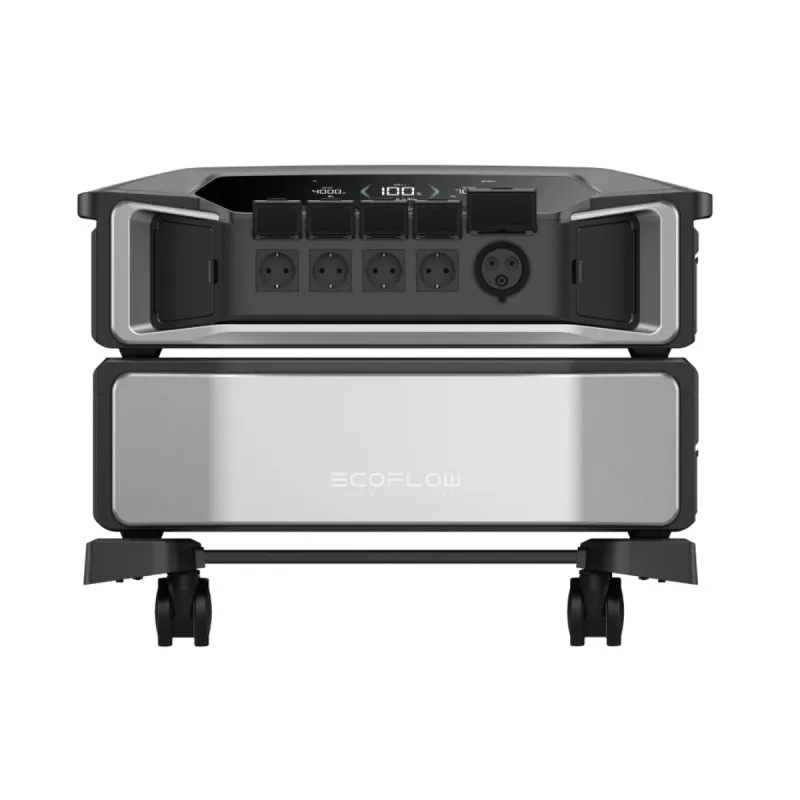
EcoFlow DELTA Pro Ultra
What I liked:
- 6,144 Wh per unit and 7,200W of 120/240V output: genuinely whole-home rather than essentials-only
- Scales to 90 kWh, which is what makes it a Powerwall alternative rather than a big power station
- Charges to full in about 2 hours, so it recovers between waves of an outage
- Modular: inverter and batteries are separate, so you buy capacity as you need it
What let me down:
- Whole-home transfer needs the Smart Home Panel, which is a serious install and a serious extra cost
- Each battery module is heavy enough to need two people and a permanent spot
- At this price a quoted, permitted home battery deserves a side-by-side comparison before you commit
What to be honest about
The cost is serious, and so is the weight
Approaching whole-home capacity means a serious total, and each unit is genuinely heavy. This is a major purchase and a two-person installation job, even where it undercuts a fixed install.
"Whole-home" still needs an electrician
Backing up real circuits means a transfer switch or smart panel, and realistically a licensed electrician. It's more off-the-shelf than a wall battery, but the marketing implies less setup than the reality — budget for the electrical work as part of the price, not as an afterthought. What each connection method involves is covered on the home backup hub.
It's a lot of hardware to house
A stacked multi-battery system takes real floor space and has meaningfully more to configure than a single portable unit. Worth measuring the space before ordering, which I say from experience.
Who it's for
- Good fit: a homeowner who wants large, expandable backup with strong solar recharging, values buying in stages, and wants an alternative to a single fixed installation.
- Look elsewhere if: you only need to keep essentials running. A large portable station does that for a fraction of the price — see home battery vs portable power station.
Verdict
As expandable, high-output, solar-friendly backup that competes with fixed installations, this is one of the more compelling options in its class. The fundamentals are right: LFP chemistry, real output, big solar input, staged expansion.
The honest caveats are cost, weight, and the fact that true whole-home use still needs proper electrical integration — which means the gap to a fixed install is smaller than the marketing suggests.
If you genuinely want to back up most of a house and like growing the system over time, it belongs on your shortlist. If your real need is essentials only, size that first with the home battery sizing guide, because you may be about to overbuy by a large margin. More verdicts are in my home backup battery reviews, and the scoring method is in how I rate products.