Every time I mention I run a solar power station instead of a gas generator, someone tells me I am wasting my money. And every time I visit a friend with a loud gas generator humming in the driveway during an outage, I am glad I made the switch. The truth is neither one is "better" in the absolute. They solve the same problem in very different ways.
Here is how I actually think about it, without the brand hype on either side.
In one sentence
If you need quiet, indoor-safe power for electronics, a fridge and short-to-medium outages, get a portable power station. If you need to run heavy loads (well pump, AC, power tools all day) for long multi-day outages, a gas generator still wins on raw endurance and cost per watt-hour.
The honest head-to-head
Rough real-world comparison. Treat the numbers as ballpark figures, not lab specs.
| What matters | Portable power station | Gas generator |
|---|---|---|
| Noise | Near silent (fan only) | Loud, 60 to 75 dB |
| Safe indoors | Yes, no fumes | No, carbon monoxide risk |
| Fuel | Battery, recharge from wall or solar | Gasoline, needs storage and refills |
| Runtime | Limited by battery size (Wh) | As long as you have fuel |
| Upfront cost | Higher per watt-hour | Lower per watt-hour |
| Maintenance | Almost none | Oil, filters, stale fuel |
| Heavy loads (AC, well pump) | Only high-output models | Handles them easily |
Where the power station wins
For me, the deciding factor was living with the thing. A power station makes no noise, produces no fumes, and I can keep it in a closet and run it in the living room during an outage. No gas cans in the garage, no pull cord at 2 a.m., no oil changes.
It is also the only option that makes sense for camping if you value quiet, or for anyone who wants to recharge from solar panels and stay fully off fuel. For phones, laptops, a CPAP machine, lights and a fridge, it is genuinely the better tool.
The catch is runtime. A power station only holds what its battery holds. When it is empty, you are waiting hours to recharge unless you have enough sun.
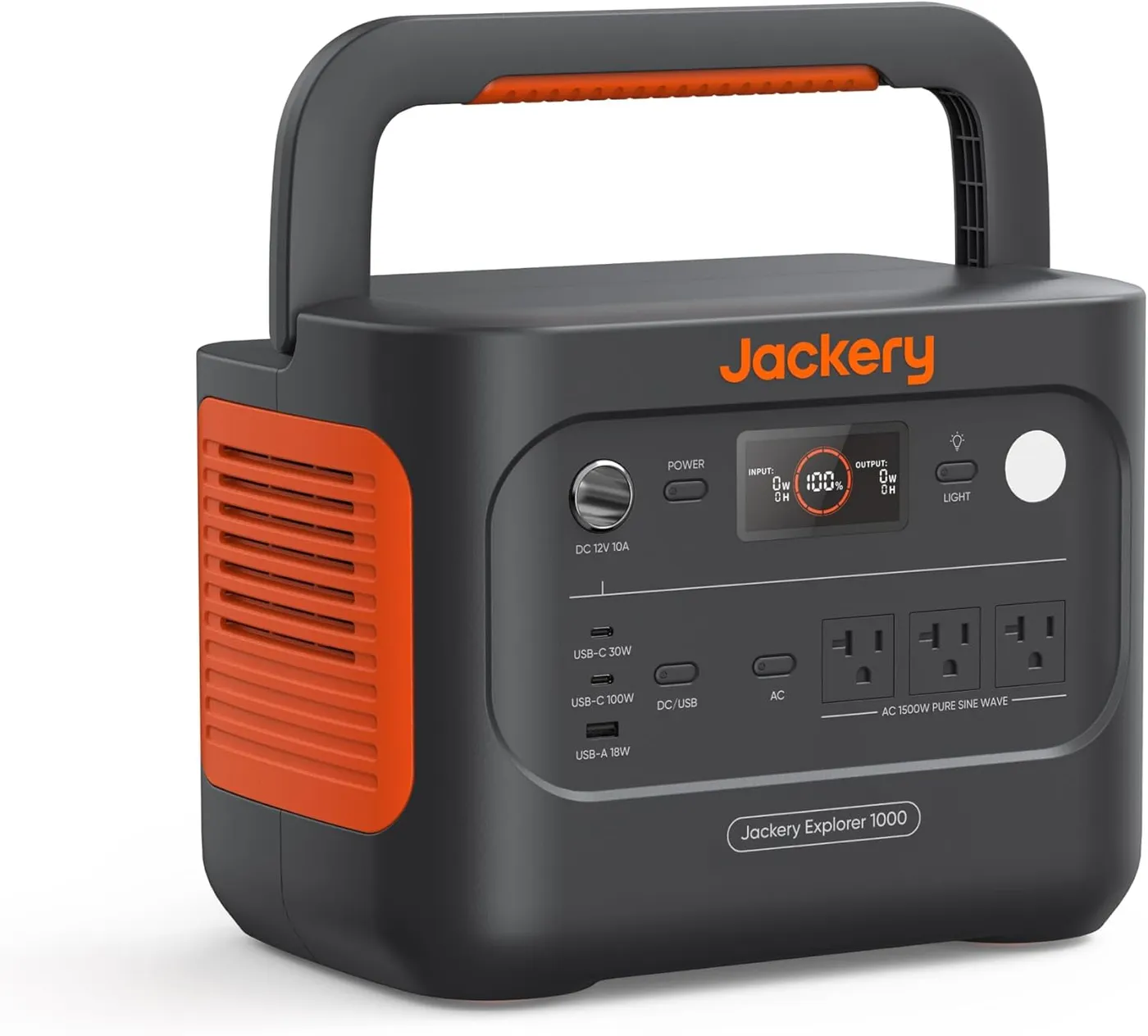
Jackery Explorer 1000 v2
What I liked:
- 1,070 Wh in a genuinely light package for the class, which is what makes it the easy camping pick
- LiFePO4 cells rated to keep over 70% capacity after 4,000 cycles
- Emergency mode charges it 0-100% in about an hour from a wall outlet
- 100W USB-C output, so it charges a laptop without running the inverter
What let me down:
- 1,500W of AC output is the lowest of the 1 kWh picks here: kettles and hair dryers are out
- Only three AC outlets, so a busy campsite runs out of sockets
- Solar panels are sold separately and Jackery's own panels are not cheap
Where to buy it for the best price
Where the gas generator wins
If your goal is to keep a whole house running through a three-day storm, including an air conditioner or a well pump, a gas generator is hard to beat. You refuel and keep going. The upfront cost per usable watt-hour is much lower, and heavy inductive loads that make a small inverter choke are no problem.
The price you pay is everything else: noise your neighbors will hear, fumes that mean it must stay outside and far from windows, fuel you have to store and rotate, and maintenance you cannot skip if you want it to start when you actually need it.
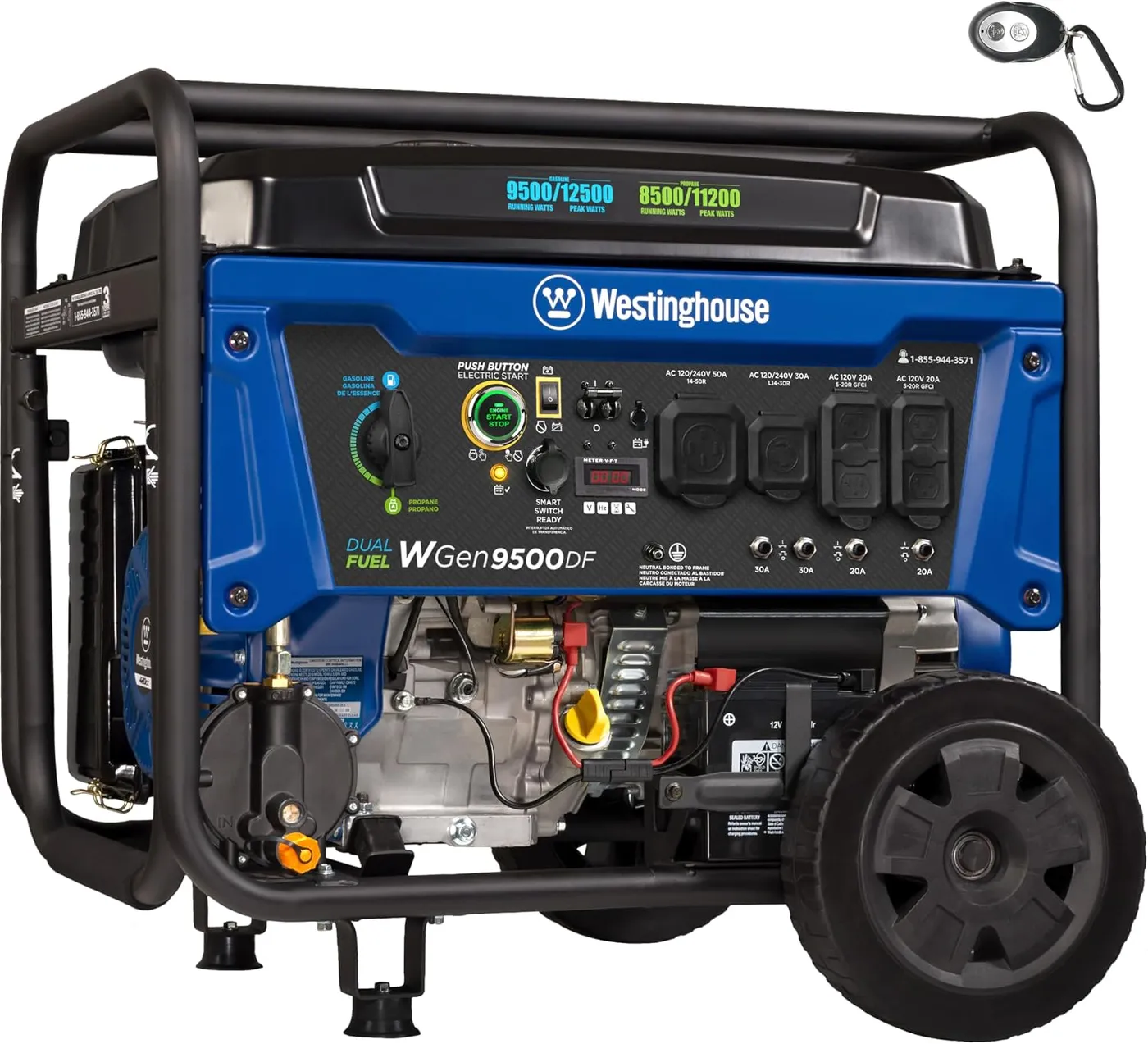
Westinghouse WGen9500DF
What I liked:
- 12,500 peak / 9,500 running watts: more sustained output than any battery here, for a fraction of the price
- Dual fuel, and propane stores indefinitely, unlike gasoline that goes stale in the can
- Up to about 12 hours on a 6.6-gallon tank, and you can refuel at 3am instead of waiting for sun
- Remote electric start and transfer-switch ready
What let me down:
- Loud, and it must run outdoors well away from windows: carbon monoxide kills every storm season
- Needs oil changes, fuel stabilizer and periodic test runs, or it will not start when you need it
- Cannot run indoors, and cannot quietly power anything overnight without annoying the neighbors
Where to buy it for the best price
How to decide
- You mostly power electronics, a fridge, lights, and want quiet. Get a power station. See my portable power station buying guide to size it.
- You need to run an AC unit or well pump for days. Get a gas generator, or a very large power station paired with solar.
- You want indoor-safe backup and zero maintenance. Power station, no contest.
- You want the lowest upfront cost for long runtime. Gas generator.
- You are not sure how much capacity you need. Run your appliances through the runtime calculator first.
Personally, I landed on a large power station plus a couple of solar panels, and I have never looked back. But I do not have a well pump. If I did, I would keep a generator around too. Be honest about your loads before you spend.
If the answer is a power station, the portable power station hub covers which size band fits which job, and my portable power station reviews cover the individual units. More head-to-heads are in all my portable power comparisons. And if your real problem is keeping a house running rather than powering gear you carry, that's a different ladder entirely — see home backup power.