There is a lot of confusion between a "home backup battery" and a "portable power station," partly because marketing blurs the line on purpose. They overlap, but they are aimed at very different problems and budgets. Buy the wrong one and you either overspend by thousands or end up unable to run what you actually care about.
Here is how I separate them.
In one sentence
If you want to keep a few essential circuits alive during outages and move the unit around, a portable power station is cheaper, simpler and usually enough. If you want to back up much of your house automatically, including large appliances, and you are staying put, a fixed home backup battery is the real answer, at a much higher cost.
The honest head-to-head
Ballpark comparison, not exact figures.
| What matters | Portable power station | Home backup battery |
|---|---|---|
| Typical capacity | 1 to 5 kWh | 5 to 20+ kWh |
| Install | Plug and play, none | Professional, permits, panel work |
| Cost | Hundreds to low thousands | Many thousands, often five figures installed |
| Automatic switchover | No, you plug in | Yes, transfers instantly |
| Powers large appliances | Only the biggest units | Yes, whole circuits |
| Portable | Yes | No, wall-mounted |
| Best for | Renters, essentials, flexibility | Homeowners, whole-home backup |
Where the portable power station wins
For most people worried about outages, a large portable station is the pragmatic choice. There is no electrician, no permit, and no five-figure quote. You keep it charged, and when the power drops you plug in a fridge, some lights, the internet and phones. When the outage ends you roll it back into a closet.
It is also the only option that makes sense if you rent, or if you might move: you own the hardware, not a fixture bolted to a house you may leave.
The limit is capacity and manual operation. You are powering essentials, not the whole house, and you have to physically plug things in.
Worth being clear about scope here. I am judging these units purely as outage insurance. Everything else they are good at — camping, van life, job sites, weight and portability — belongs to a different decision, and I have covered it separately on the portable power station hub. If backup is a secondary use for you rather than the main one, start there instead, and size it with the portable power station buying guide.
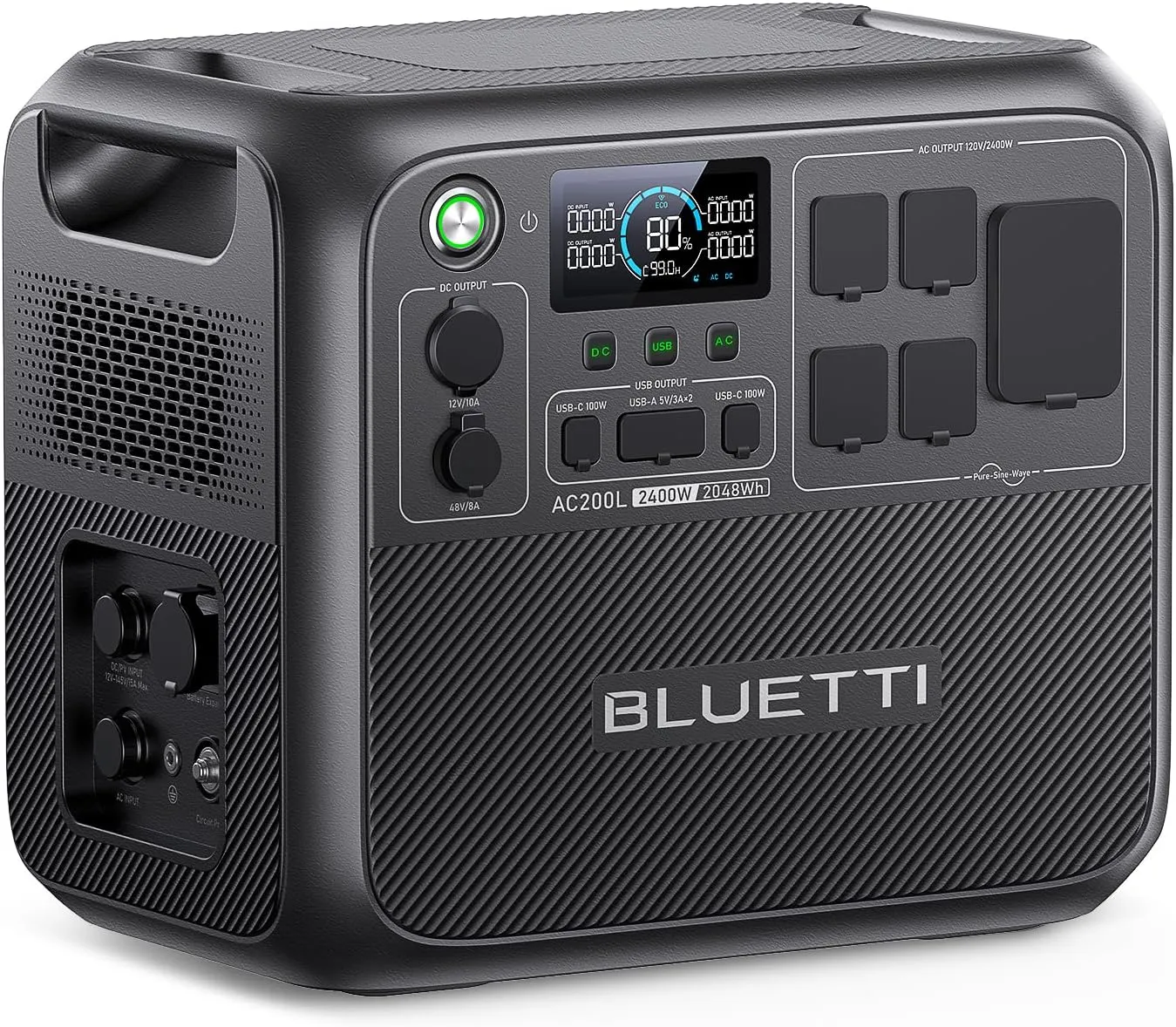
BLUETTI AC200L
What I liked:
- 2,048 Wh and 2,400W (3,600W with Power Lifting): the practical floor for riding out a real outage
- Expandable to 8,192 Wh with B210/B230/B300 batteries, so it grows instead of being replaced
- 30A RV output, the port that makes it genuinely useful for a trailer or camper
- LiFePO4 cells and up to 1,200W of solar input for fast refills
What let me down:
- About 62 lb: two-handed, and you will not be moving it often
- Power Lifting only helps resistive loads such as heaters, not motors
- The expansion batteries cost nearly as much as the unit itself
Where to buy it for the best price
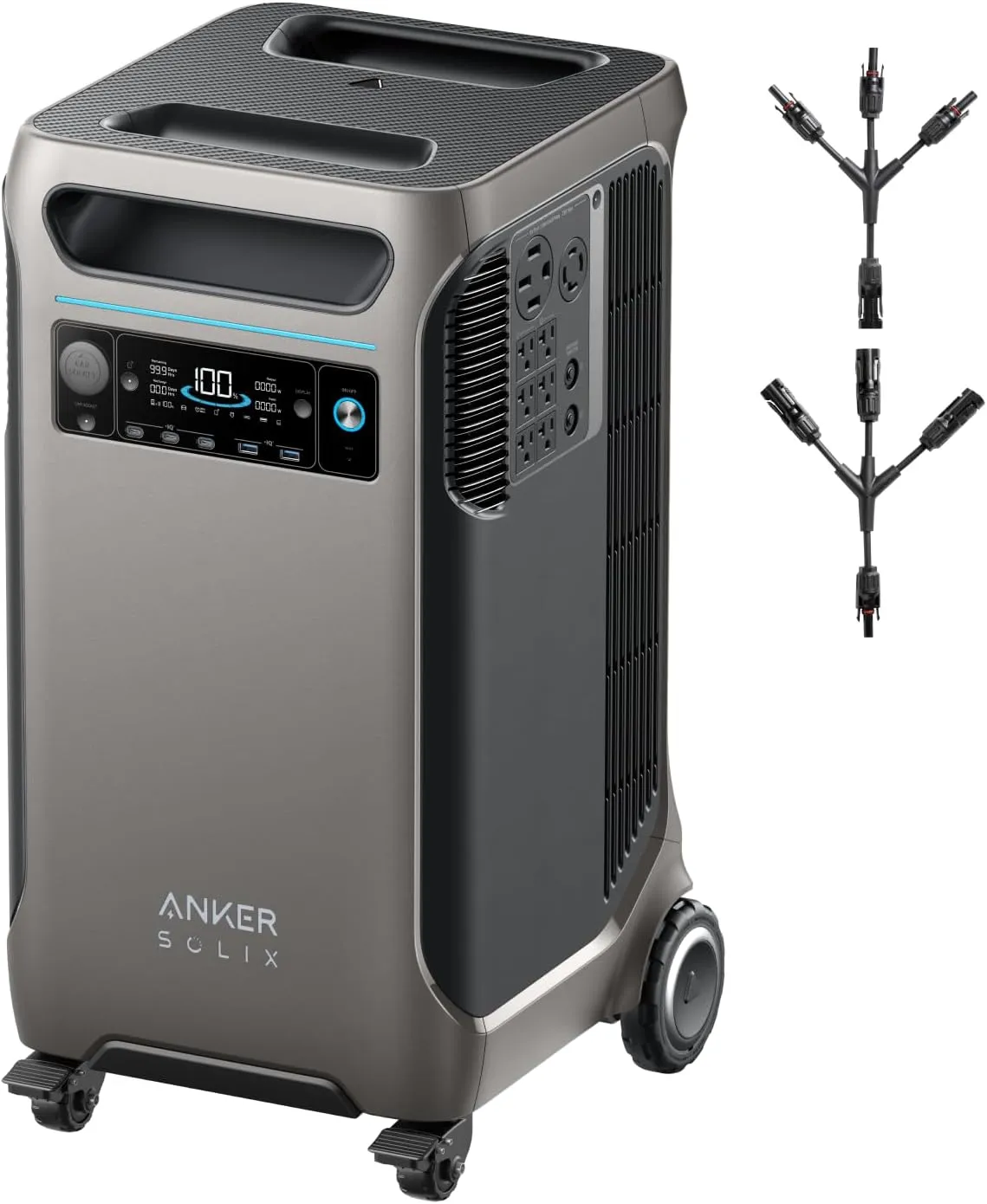
Anker SOLIX F3800
The strong points:
- Same 3,840 Wh and 6,000W dual-voltage output as the Plus, usually for less money
- True 120V/240V output, which is what lets it drive 240V appliances a normal power station cannot touch
- Built-in UPS switching for anything you cannot afford to have blink
- LiFePO4 chemistry rated for years of cycling rather than hundreds of cycles
The weak points:
- Lower solar input than the Plus revision, so refilling it from panels takes noticeably longer
- Very heavy and awkward to reposition once installed
- Expansion batteries and transfer hardware add up fast beyond the headline price
Where to buy it for the best price
Where the home backup battery wins
If you want the lights, the fridge, the AC and the well pump to simply keep working when the grid fails, without you doing anything, a fixed battery tied into your panel is what delivers that. It switches over automatically in a fraction of a second, holds far more energy, and can be paired with rooftop solar to recharge through a long outage.
That capability costs real money. You are looking at professional installation, permits, and a total that often reaches five figures. It is a house upgrade, not a purchase you make on a whim.
How to decide
- You rent, or want flexibility. Portable power station, easily.
- You just need essentials through outages. A large portable station covers it for far less money.
- You own the home and want hands-off whole-home backup. Fixed home battery.
- You already have or plan rooftop solar. A home battery pairs naturally with it; size it with the home battery sizing guide.
- You are not sure how long any battery would last you. Run your loads through the blackout runtime calculator first.
My honest advice: most people asking this question actually want the portable route and are surprised to learn how much whole-home backup costs. Start by listing what you truly need to keep running. Often it is a fridge, internet, phones and a few lights, and a large portable station handles that for a fraction of the price.
This comparison is really a question about which rung of the ladder you're on, and there are four of them rather than two — they're laid out on the home backup hub, along with the connection methods that drive most of the cost difference. More head-to-heads are in my home backup comparisons, and verdicts on specific systems in my home backup reviews.